


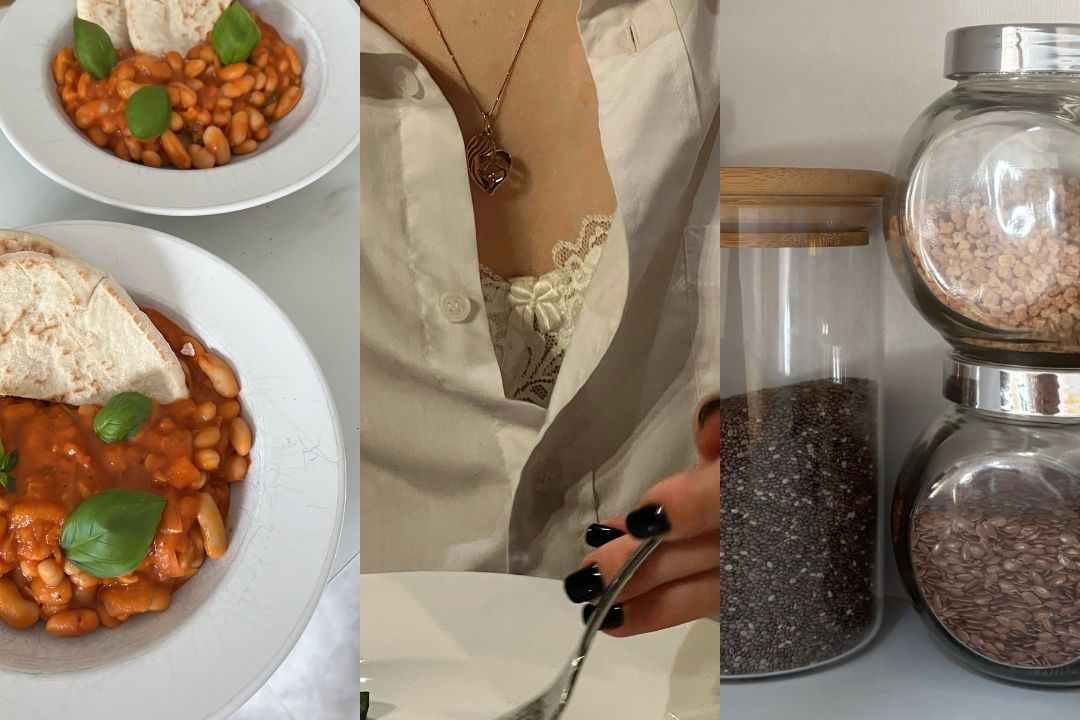
I’ve been trying to dial in my Postmates spending by cooking more at home, only to realize my grocery hauls weren’t exactly doing my (admittedly non-existent) food budget any favors either. The exception? Stocking up on pantry staples that go the distance: cue the beans. They might get a bad rap for causing gas, but their inexpensive, versatile, and nutrient-packed profile can’t be beat. Just ask TikTok creator Scott Koya, a self-proclaimed “beans addict” (no joke, her entire account is dedicated to the stuff). She swears by eating two cups of beans a day, claiming it helps keep things moving, reduce inflammation, and even take the edge off your mood.
Koya is just one example of a surprisingly massive community of “BeanTok,” or creators, nutritionists, and health coaches alike praising a daily dose of beans for various health benefits–namely the trend to eat two cups of beans a day. One follower commented on Koya’s video, “Day 2 of 2 cups of beans a day and already feel the difference. Aside from the digestive benefits, I feel fuller and [have] less snack cravings.” To find out whether beans really live up to the hype, I turned to Kris Buchanan, a certified holistic nutritionist to, yes, spill the beans.
Experts Consulted
At The Everygirl, we believe that wellness advice should be grounded in accurate, science-backed information to ensure our readers can make informed decisions about their health and well-being. That’s why we prioritize consulting trusted, credible experts—so every piece of content is both reliable and empowering.

KRIS BUCHANAN
Nutritionist Kris Buchanan is the founder of GOODONYA, a nature-inspired, organic food and beverage brand and restaurant in San Diego. Having spent most of her early life as an endurance athlete, she turned to nutrition and food to heal health issues she’d developed from relying on sugary sports drinks and processed food. As a certified holistic nutritionist, Buchanan educates on the importance of eating real, nourishing food.
Benefits of Eating Beans Daily
They are fiber-packed
Don’t let their small size fool you—beans pack a serious nutritional punch (more to come on that). But where beans really shine is in their fiber content, which Buchanan pointed out most of us don’t get nearly enough of. Few foods compare since beans offer an ideal combination of both soluble and insoluble fiber (soluble fiber can help improve digestion and lower blood sugar, while insoluble fiber can soften stool, making it easier to pass).
They contribute to healthy immune, hormone, and emotional function
Koya wasn’t kidding—their health perks go far beyond the gut, from keeping your hormones in check to bolstering your mental health. Buchanan explained, “Beans are also one of the best natural prebiotic foods on the planet, which feeds the beneficial bacteria in your gut, helping them produce short-chain fatty acids that can strengthen your gut lining, boost your immune system, balance hormones, and support your mood through the gut-brain axis.”
They can reduce inflammation
Researchers at the Illinois Institute of Technology recently discovered eating one cup of black beans or chickpeas per day can lower chronic, low-grade inflammation in the body. During the 12-week course of the study, black bean eaters reduced their levels of a key marker of inflammation from 2.57 picograms per milliliter to 1.88—a notable decrease. Lead researcher Indika Edirisinghe, a professor of food science and nutrition at IIT, explained that black beans have something called polyphenolic compounds, with antioxidant and anti-inflammatory activity, that give them their rich, deep black coloring.
They are an unprocessed source of essential nutrients
Often referred to as “nature’s perfect food,” beans are plant-based bites consumed in their natural state, with little to no processing. “Beans are one of nature’s most balanced foods, and they’re packed with protein, fiber, minerals, and slow-digesting carbohydrates,” Buchanan said. “The closer your food is to how it grows, the better your body understands it, and organic beans are about as whole and unprocessed as food gets.”
But, Should You Eat Two Cups a Day?
Beans can no doubt be a reliable daily mainstay for many people, but you don’t have to eat two whole cups of beans per day to reap the advantages. Rather, Buchanan suggested aiming for 1/2-1 cup a day. While eating two cups (about two cans) of beans every day could help you meet the daily fiber requirements for adults—25-28 grams for women—she said it’s on the high side. For example, a 1-cup serving of canned black beans provides 18.2 grams of fiber.
Are There Any Downsides to Eating Beans Daily?
Beans might have a bad reputation for digestive distress and gas, but Buchanan said that’s mostly due to how they’re prepared. “Soaking and rinsing dried beans (or choosing brands that cook them properly) removes the natural sugars that can ferment in the gut [read: cause gas].” If your digestive system isn’t used to them (just like any form of fiber), beans can make you feel bloated and gassy, but gradually adding small servings to your diet can help your gut adjust.
While beans are a nutritional powerhouse, they can come with a few hidden, not-so-great-for-you extras, thanks to the can lining: excess salt, nitrates, nitrites, and traces of heavy metals. “Most cans are lined with synthetic resins that can leach bisphenol compounds [industrial chemical compounds used to make certain plastics] [into food], like BPS or BPF, and many have added table salt, preservatives, and seed oils,” Buchanan warned. “If you’re eating beans daily, it’s worth being intentional.” Opt for organic and BPA/BPS-free brands like Eden Foods or Jovial (their beans come in glass jars).
What Are the Best Ways to Enjoy Beans?
“Beans are one of the most sustainable, nutrient-dense, and affordable foods on earth, but how you source them matters,” Buchanan said. “Go organic, skip the can when you can, and treat beans like what they are: a small seed with huge power to fuel your body and the planet.” But are some beans more nutritious than others? Buchanan noted that each type of bean has its own nutrient personality. “In general, the darker the bean, the higher the antioxidant content, and when they’re organic and properly cooked, all varieties are powerhouses,” she said. Her personal favorites? Black beans (loaded with antioxidants, similar to dark berries), chickpeas (higher in fiber and effective for stabilizing blood sugar), and navy and pinto beans (classic digestive and heart health helpers).
Whether you throw them in salads, soups, tacos, or bowls, or blend them into dips or spreads, beans deliver both bold flavor and a hearty boost of protein and fiber. Here are some of Buchanan’s go-to uses:
- Soak dried, organic beans, then cook them with bay leaf, garlic, and bone broth (it adds flavor and makes them easier to digest)
- Prep some dried, organic beans and store them in glass jars with a bit of their cooking liquid so they’re ready to use (like canned beans)
- Toss them with organic olive oil, sea salt, lemon, and herbs for a snack or side dish
- Make a viral dense bean salad

Katherine Chang, Wellness Staff Writer
Katherine Chang is The Everygirl’s Wellness Staff Writer with over five years of experience in the health and wellness space. She navigates the latest wellness topics and trends through expert interviews and studies, and she’s always first in line to try them firsthand
