


As far back as my memory goes, my mom made being Chinese something to be celebrated. Every January or February, she’d come to my school for Chinese New Year dressed in a silk qi pao (a traditional Chinese dress), bearing gifts like red envelopes, chocolate gold coins, and bookmarks where she’d handwrite each of my classmates’ Chinese names—names she chose for them based on the phonetics of their English ones. I couldn’t articulate it then, but before “representation” and “Asian identity” became part of the cultural conversation—and before being Chinese was something you could build a routine around for the algorithm—my mom was in my classroom turning our heritage into a main character moment.
At home, I always knew where she was by the sound of her tuo xie (AKA house slippers) hitting the floor. You’d usually find her with a steaming cup of hot tea in hand, either green tea or a Chinese red date and goji berry brew she threw together, meant to “nourish the blood.” Her idea of a comfort meal? Savory, slow-cooked rice porridge, better known as congee. Cold drinks were a big no-no, especially during your period, and going to bed with wet hair was practically forbidden for the good of your health.
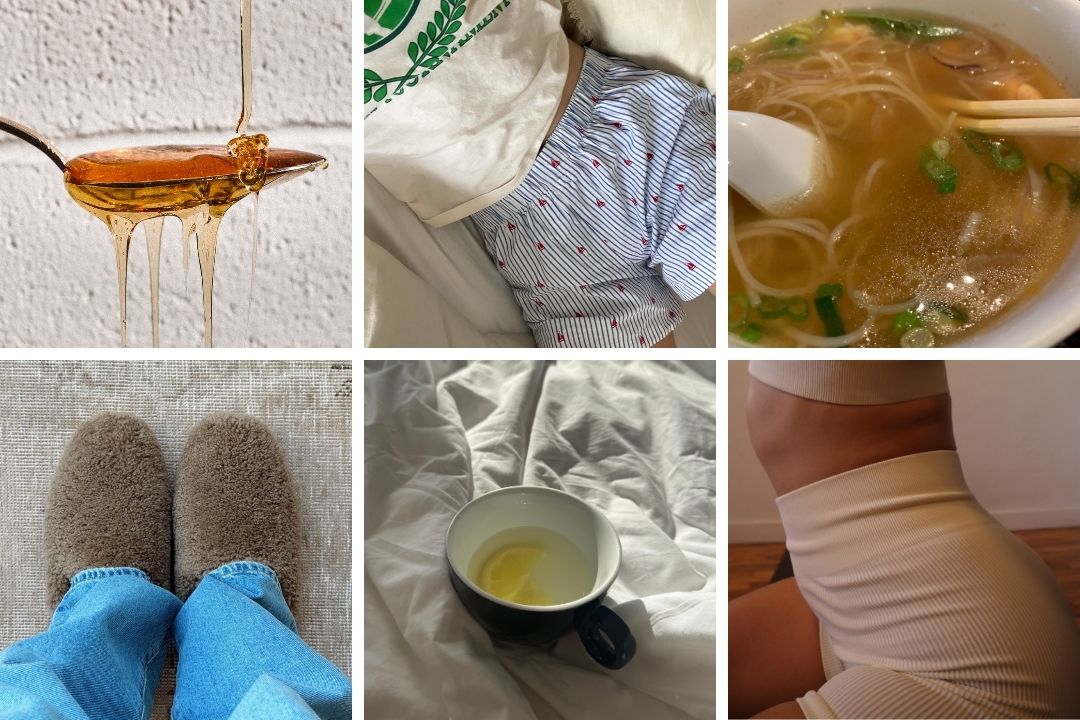
All this to say, I grew up immersed in traditional Chinese wellness habits long before they became mainstream and packaged as a glow-up strategy. Fast forward to today, and my FYP is full of them with the narrations “Chinese baddie,” “Day one of becoming Chinese,” “I’m at a very Chinese time in my life,” or “Chinamaxxing.” In video after video, TikTokers drink warm water upon waking, swap iced drinks in favor of sipping red date tea, slide into house slippers at the front door, and eat congee for breakfast. They talk about “heaty” versus “cooling” foods as if they’ve cracked a code.
My initial reaction was it could use a rebrand (we can do better than “Chinese baddie,” no?) and the timing felt right since Chinese New Year—a powerful time for resets—just passed. But none of it was new. My mom had been doing and saying all of it way before it became content. Everyone may be calling it “Chinese baddie” and treating it as a trend, but to my mom, it was just common sense. Maybe people are leaning into it now because they’re finally realizing what I’ve known my whole life: being Chinese isn’t something to downplay; it’s a heritage to appreciate and respect, long after the hashtags disappear.
To dig deeper, I spoke with an expert in Traditional Chinese Medicine (TCM) about the principles behind the trend: what exactly is the “Chinese Baddie” routine, what’s legit, what’s misunderstood, and how someone curious about it might begin practicing it in a way that honors the system it comes from. Here’s what she had to say.

LULU GE
Lulu Ge is the founder and CEO of Elix, the first modern wellness platform to combine Traditional Chinese Medicine (TCM) with clinical research to support whole-body health. After facing a debilitating health crisis post–birth control, Ge turned to her Chinese heritage and launched Elix to democratize access to evidence-based, holistic healing.
What the “Chinese Baddie” Trend Means for Wellness
“What people are calling the ‘Becoming Chinese’ or ‘Chinese Baddie’ aesthetic is really a playful entry point into the foundational lifestyle principles of Chinese medicine,” said Lulu Ge, founder and CEO of Elix, a whole-body health and wellness platform rooted in Traditional Chinese Medicine. On the surface, it’s wearing house slippers, drinking apple-ginger water in your Stanley, and eating hot breakfasts instead of a smoothie or an iced oat latte. But underneath that, Ge explained it’s something much less aesthetic and much more foundational: protecting your Qi (AKA vital energy), supporting digestion, regulating your nervous system, and building resilience through daily rituals Chinese people have been practicing for hundreds (if not thousands) of years.
At its heart, Ge noted that Chinese medicine is a 2,000-plus-year-old system of understanding how the body stays in balance, how imbalances develop, and how to intervene early. “The trend may start with aesthetics, but the real power of Chinese medicine is that it teaches you how to build internal strength that lasts far beyond a viral moment,” she said. “And I think that’s something worth celebrating.”
“Everyone may be calling it ‘Chinese Baddie’ and treating it as a trend, but to my mom, it was just common sense.”
The Complicated Feelings Behind the Trend
That said, this trend isn’t without its complications. My experience was different, but for a lot of Chinese Americans, seeing non-Chinese creators adopt the very cultural practices they were once ridiculed for can stir up unresolved feelings of shame. “Many of us grew up being teased for our food, our accents, or the very habits that are now considered ‘wellness trends,'” Ge pointed out. “There could be real childhood trauma tied to that experience of assimilation and being told our culture was ‘weird’ before it was trendy.”
What makes this scene feel different is that we’re seeing more Chinese creators at the forefront of the hashtags, shaping the trend on their own terms. “That signals to me a genuine sense of curiosity and openness to learning about Chinese culture rather than just borrowing the aesthetic,” Ge said. A few of her own videos related to the self-care movement—from “Asian Mom Tips for New Chinese Baddies” to tutorials on how to uplevel the now-famous apple drink—have generated major buzz on TikTok and Instagram. As a Chinese immigrant kid, Ge grew up with her mom yelling at her to avoid iced drinks and wear her socks and slippers. “At the time, it felt a bit embarrassing and now, seeing these teachings go viral is deeply healing for my inner child.”
So, Why Has This Trend Taken Off?
With global instability, rising costs, and endless digital overwhelm, everything feels out of sorts. Open your phone, and it can feel like total chaos and everything is out of your control. But the “Chinese Baddie” trend gives people something small and tangible they can control, Ge said. “You might not be able to fix the uncertainties in the world, but you can boil apples, wear socks, drink warm water, and feel a little more grounded in your body.”
Another upside Ge brought up is that it’s one of the rare corners of the internet that feels genuinely supportive and kind. What stands out most to her in the comments of her videos is respect, engagement, and people genuinely wanting to understand the “why” behind the rituals, not just the how. The comment sections aren’t bashing people; instead, people are teaching, supporting one another in adopting Traditional Chinese Medicine practices, and cultivating a genuine sense of belonging and safety. “To me, this isn’t just an aesthetic,” she said. “It’s the beginning of a wider cultural shift in conversations.”
People are also pushing back against burnout culture—we’re tired of feeling depleted. For years, wellness has been about maxxing out: intense workouts, more products, 10-step routines all disguised as self-care. Ge explained how TCM provides a gentler alternative: “Chinese medicine offers something that feels more grounded, intuitive, and easier to adopt into our everyday lives,” she said. “We’ve heard that people love learning how TCM can help us better understand the signs and symptoms of our bodies. It feels like TCM is giving people more agency and a greater sense of understanding over our bodies.”
The TCM Practices Worth Trying (Beyond the Aesthetic)
Beauty rituals like gua sha and “glow-up” herbal tonics might get more clicks on TikTok, but Ge said the practices that really make a difference are the ones that work from the inside out. She highlighted two viral TCM habits that have the biggest impact:
- Eat warm, cooked foods in the morning. In TCM, digestion is the source of Qi (our vital energy) and circulation. Cold or raw foods first thing in the morning can dampen that digestive fire, leaving our energy weaker and our circulation sluggish. A warm breakfast like congee, soup, or oatmeal can improve bloating, stabilize energy, and support menstrual health over time. It’s a perfect example of food as medicine that’s tangible and leads to lasting benefits.
- Protect your body from cold exposure, especially your feet and lower back. In TCM, cold can constrict circulation and contribute to pain, especially for women. Keeping your body warm—socks, scarves, layering—supports blood flow and reduces stagnation. These small, low-risk tweaks can be highly effective in boosting digestion, immunity, and hormonal balance for a wide range of people.
The trending, aesthetically-leaning practices often overshadow what Ge sees as the most powerful tools: emotional regulation and body literacy. After all, in Chinese medicine, emotions aren’t separate from your physiology. “Part of being a ‘Chinese Baddie,’ in my view, is emotional self-awareness,” she said. “Practices like Qi Gong, breathwork, or journaling may not be as visually viral, but they are deeply medicinal. When we pair aesthetic rituals with emotional processing, that’s when the inner and outer glow becomes sustainable.” Then there’s learning to read your body’s signals. “Your tongue, your period, your skin, your digestion, these are diagnostic tools in Chinese medicine,” Ge continued. “That level of literacy goes far beyond aesthetic wellness.”
How to Start Using TCM in Your Everyday Life
As with most wellness practices, Chinese medicine isn’t one-size-fits-all or about copying someone else’s ritual. It’s about tuning into your own body’s signals and patterns. “Chinese medicine is intelligent because it’s individualized,” Ge said. “Two people can share the same symptom and need completely different approaches. It teaches that all symptoms are signals of where our bodies need additional support, not inconveniences to suppress.” Your menstrual cycle can reveal a lot about your overall health. Your digestion is basically your stress radar. Your skin broadcasts when your internal state is out of sync. Pay attention to what your body is telling you by asking yourself:
- Do I run hot or cold?
- Do I feel more anxious and wired, or tired and heavy?
- Is my digestion strong or sensitive?
- For women: what does my menstrual cycle look like?
There are no “right” or “wrong” answers—they’re all clues to what’s happening beneath the surface. TCM is all about listening to your body and making small, lasting adjustments that nurture balance over time.
Then, start with these foundational lifestyle shifts:
- Prioritize consistent sleep
- Eat more cooked foods
- Swap the iced coffee for room temperature or warm lemon water
- Slow down your meals and chew thoroughly
- Move gently and regularly
If possible, Ge recommends working with a licensed Chinese medicine practitioner who can help identify your unique pattern. Pro tip: Elix offers a free online health assessment anyone can take to find out where their body may be out of balance.
Why TCM Matters
“Chinese medicine is about prevention, resilience, and root cause healing,” Ge said. “And in a time when healthcare feels increasingly fragmented and inaccessible, that philosophy feels more relevant than ever. If this trend opens the door to deeper literacy about our bodies and more compassionate ways of caring for ourselves, then it’s doing something meaningful.”
I can’t help but think that if my mom were still here, she’d get a kick out of our culture trending. She’d probably send me “Chinese Baddie” TikToks and offer her own “Chinese big sister” or “Asian mom” advice—the same way she lovingly did with her students and my husband (who are not of Chinese descent), insisting he drink tea instead of cold water at dinner. If this cultural moment is embraced for long enough (I hope it sticks), maybe what’s been labeled as “Chinese Baddie” will be seen for what it is—not a phase or something you try on for aesthetic, but a time-honored tradition you step into with curiosity, appreciation, and care.


Katherine Chang, Wellness Staff Writer
Katherine Chang is The Everygirl’s Wellness Staff Writer with over five years of experience in the health and wellness space. She navigates the latest wellness topics and trends through studies, articles, and is always first in line to try them firsthand.
Feature graphic images credited to: Britney White | Dupe, Mary Ellen | Dupe, Tahnae Tidwell | Dupe, Nicole Schaller | Dupe, Aleisha Kalina | Dupe, Cora Pursley | Dupe
