

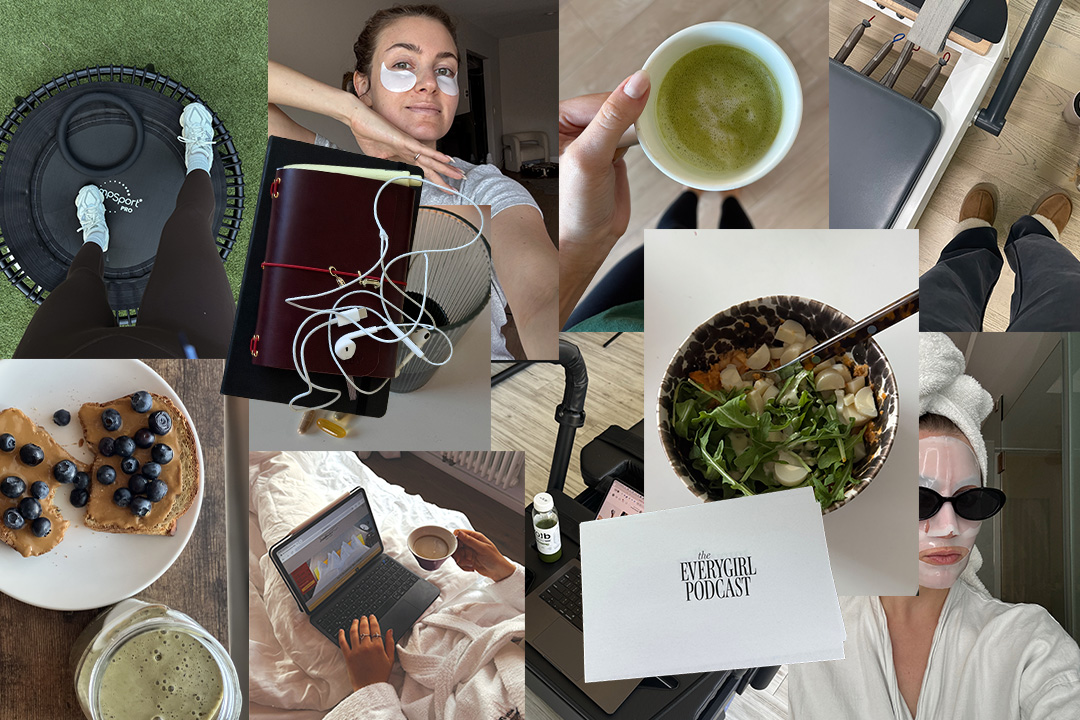
Somehow, we’re here again: the time of year when we tend to start acting like the rest of the year is a wash. We might mentally write off the last two months, let our routines slide, and tell ourselves we’ll get serious about our goals after the holidays. But what if you didn’t wait until then to start becoming the person you keep promising yourself you’ll be? Imagine how you’d feel waking up New Year’s Day already a few steps closer to the habits and life you want, rather than facing another daunting list of resolutions that may or may not stick.
Call it your winter arc or consider November the new January. However you frame it, the next seven weeks can be your head start on living more like the version of yourself you want to be. Wondering where to start? Here are seven steps for how to change your life before the year is over.
7 Ways to Level Up Your Life By The End of The Year
1. Create your 2027 identity.
Before you start vision-boarding everything you want to happen in 2027, get clear on who you want to be. In other words, what does your future self look like? One of the biggest mistakes we make when trying to improve our lives is getting so caught up in the desired outcome that we don’t spend enough time considering who we need to become in order to get there. Goals tell you where you want to end up; your identity shapes the choices you make along the way.
Psychology calls this identity-based motivation, or the idea that our sense of who we are influences the choices we make. When a behavior feels consistent with our identity, we’re more likely to see it as something that makes sense for us to do. For example, if you’ve always seen yourself as someone who’s terrible with money, budgeting, investing, or learning about finances might feel out of reach. But if you flip the switch and view yourself as someone who’s financially responsible, those same behaviors will seem possible.
Say one of your goals is to have more money. You might set a target to save a certain amount over the next six months or land a promotion by the end of the year. Those are solid places to start, but zoom out: What would you do differently if financial abundance was already your reality? Would you avoid looking at your bank account, or would you make a habit of keeping track of your spending? Would you wait for someone to recognize your potential at work, or would you seek out opportunities to grow? Asking yourself these questions helps you identify the behaviors you can start practicing now to become the best possible version of you—regardless of how much money is currently in your bank account.
The same goes for your health and wellness. Rather than focusing on a number on the scale or how many workouts you want to get in each week, envision how the healthiest version of you carries out her day on a typical Wednesday. What does she eat for breakfast? How does she move her body? What does she do when she’s stressed or running low on energy? If your goal is to have stronger relationships, imagine how that version of you communicates when she’s upset and shows up for the people she loves.
By the time January rolls around, you won’t just have a list of goals for 2027. You’ll have spent the last several weeks practicing the habits and behaviors that will help you actually reach them.
Try it yourself: Set aside 20 minutes this week and write out a day-in-the-life of your highest self by the end of 2026. This isn’t your best life or your ultimate future self, but getting to know who you could realistically be in just a couple months if you started making moves today. Get specific, almost as if you’re writing a scene in a movie. Where do you wake up? What’s the first thing you do? What are you wearing? What does your morning feel like? How do you spend your workday? What do you do when something doesn’t go according to plan? What are you doing in the evening? And most importantly, how do you feel about yourself and your life? Then, every morning, when you’re looking at your planner or writing your to-do list, return to this question: How would I show up today if I were already the person I’m working toward becoming?
2. Make your habits irresistible.
If you’re not waking up at 5 a.m., dragging yourself through workouts you hate, and giving up all your favorite foods, we’re made to feel like we’re not fully committed to our goals. But the idea that changing your life requires more discipline and more willpower is what makes self-improvement feel so draining—and why so many people struggle to make lasting changes.
Think about the habits you already have that you never have to talk yourself into. Making your morning coffee, watching your favorite show at night, or scrolling TikTok before bed probably don’t require a habit tracker or an accountability partner since your brain associates them with something pleasurable. So why not use that same approach to build the habits that actually make your life better?
Enter: positive reinforcement. It’s the psychological principle that we’re more likely to repeat a behavior when it’s followed by a rewarding experience. Instead of forcing yourself to do something you dread, find ways to make the habits you want to stick to more enjoyable.
If you’re trying to make movement a habit, decide what kind of movement you genuinely look forward to. Perhaps it’s a dance class with your friends, a walk to get matcha as you listen to your favorite podcast, or stretching on the floor while watching Real Housewives. Want to eat more vegetables? Find recipes that make you excited to eat them, instead of settling for a salad you don’t enjoy. If you want to get better at managing your finances, turn your weekly money check-in into a little ritual: light a candle, make your favorite drink, put on some music, and spend 15 minutes reviewing your accounts.
While the long-term payoff may be the end goal, it’s easy to lose sight of how important it is to enjoy the experience of getting there, too. You know that exercising regularly will make you feel stronger in six months, but if you drag your feet every second of your workout now, it’s going to be really hard to convince yourself to keep it up. Get so good at aligning your habits with your personality, preferences, and lifestyle that taking care of yourself starts to feel like one of the best parts of your day.
Try it yourself: Focus on joy-first habits. Take whatever habit you’re trying to cultivate and ask yourself, How can I make this more pleasurable? Maybe you’ve been trying to become someone who meditates every morning, but sitting in silence for 20 minutes sounds horrible. What if your morning mindfulness practice looked more like lying by the window with your favorite playlist, taking a few deep breaths, and enjoying your coffee without looking at your phone? Or maybe spending 20 minutes reading a book before getting out of bed. The point isn’t forcing yourself into a wellness influencer’s routine; it’s to discover one that works for you.
3. Implement your winter glow-up formula.
This is where we get into the physical habits that can help you feel your best by the end of the year. No elaborate, drawn-out wellness routine or a nightstand crowded with supplements. Just six basics that will lay the groundwork for multiple health goals at once: protein and plants, strength and steps, and sleep and sunlight. (It has a ring to it, right?)
- Protein and plants. Protein is essential for building and maintaining muscle, and it helps keep blood sugar balanced. Meanwhile, plants deliver the fiber, vitamins, minerals, and antioxidants that support everything from your gut microbiome to your immune system. Fiber—the quiet cousin that rarely gets the spotlight—plays a major role in digestion, blood sugar regulation, and long-term metabolic health. So how does that translate? Breakfast could be a smoothie with protein powder, berries, spinach, and chia seeds; lunch, a bowl with tofu or tempeh, quinoa, roasted vegetables, and avocado; and dinner, lentil soup with a side of roasted broccoli or a veggie-packed stir-fry with your favorite protein. And if your holiday-party plate includes mac and cheese and pumpkin pie? You can have your mac and cheese and eat your protein and vegetables, too.
- Strength and steps: If you’re looking to build a stronger, healthier body, resistance training and consistent everyday movement are two of the biggest game-changers. Strength training helps you preserve and build muscle, whereas walking benefits cardiovascular health, blood sugar regulation, lymphatic drainage, and mental well-being. On hectic or low-energy days, a walk around the block, a few minutes of stretching, or a short Pilates video all count.
- Sleep and sunlight: Your circadian rhythm—the body’s internal clock that helps regulate your sleep-wake cycle—is influenced by light. Getting outside in the morning (ideally within an hour or two of waking) helps reinforce that rhythm, which can be especially helpful as the days get shorter in the fall and winter. And don’t treat sleep as optional. It’s when your body clocks in for muscle recovery and tissue repair and processes involved in memory, emotional regulation, and metabolic health.
Try it yourself: Include a protein source and a vegetable or fruit with each meal, commit to at least two strength workouts a week and a daily walk, and start your mornings with 10 minutes of sunlight exposure while trying to keep a more consistent bedtime. But remember: It’s OK if you don’t hit every single goal every day. Pay attention to how you feel: your afternoon energy, sleep, digestion, and strength during workouts. These aren’t flashy or glamorous for a reason; consistently giving your body the basics it needs can make a noticeable difference in how you feel over the next few months.
4. Give yourself a personal rebrand.
Think of it like a company that’s growing and evolving: It’s not necessarily starting from square one; it’s becoming a version of yourself that reflects where you’re headed. Maybe the way you’ve been dressing, spending your time, or moving through your day-to-day no longer feels like you. Take this as a sign to switch things up.
Step one of your personal rebrand: Create a mood board. What kind of energy do you want to embody? What do you want your everyday life to feel like? What are the little details that make you feel like the most confident, magnetic, put-together version of yourself? Explore what excites you without worrying about whether it fits the version of you everyone already knows. Your rebrand should feel unique and authentic to you, but it can also look a little different from your current life.
Then, bring some of that inspiration into your daily routine. Start with your closet: Go through the clothes you wear most often and ask yourself whether they make you feel the way you want to feel. Maybe you put together five outfits you love, so getting dressed in the morning is one less decision you have to make. Or, finally take those pants to the tailor or start wearing the jewelry you’ve been saving for a special occasion.
Give your space the same treatment. The environments we spend time in can impact how we feel and behave, so think about what the surroundings of your future self might look like. You might rearrange some furniture, organize the junk drawer, put fresh flowers on your desk, or frame that artwork you’ve been meaning to hang.
There’s a psychological concept called enclothed cognition that explores how the clothes we wear can influence our thoughts and behavior through the meanings we associate with them. No, putting on a blazer won’t magically make you more successful (if only), but what you wear can change how you carry yourself. And the same thing goes for your home environment: Small external changes can help you step into a different mindset and make it easier to show up the way you intend to.
Try it yourself: Give yourself a rebrand, but don’t take it too seriously. Self-improvement can get so wrapped up in discipline, routines, and hitting goals that we forget how fun it can be to reinvent ourselves. Play around with new styles, give your space a refresh, and experiment with various routines.
5. Change what you’re consuming.
From the moment you check your phone in the morning to the podcast you listen to on your commute, you’re taking in information all day long. And whether you realize it or not, it shapes what you think about, what you believe is possible, what you want, and how you feel about yourself. It begs the question: Is what you’re consuming making you feel good, or is it just keeping you stuck?
Take the analogy of our minds as gardens. Whatever you consistently feed and nurture is what grows. If you’re constantly scrolling past content that makes you feel insecure, listening to conversations centered on complaining or gossiping, or watching things that leave you anxious, you’re watering the weeds. But when you seek out new ideas, inspiring stories, interesting conversations, and people who challenge you to think differently, you’re planting seeds for the good stuff.
If you want to think differently, feel differently, and see different possibilities for your life, one of the easiest places to start is by changing what you’re regularly putting into your mind. You are what you eat, but you’re also made up of the entertainment and information you tune into.
Let’s say you’re hoping to start a business, but no one in your immediate circle has done it before (or your friends just talk about how they hate their jobs). Listening to interviews with entrepreneurs or reading about people who’ve built businesses they’re passionate about can introduce you to possibilities, career paths, and perspectives you might not have considered. Sometimes, changing what you’re exposed to can expand what’s possible for yourself.
Try it yourself: Do a quick audit of what you’re watching, listening to, and reading. Start with social media: Go through the accounts you follow and notice how they make you feel. If someone’s content leaves you comparing yourself, feeling behind, or convinced you need to buy something or change your appearance, mute or unfollow them. Then, only follow people who inspire you, teach you something, or make you laugh.
Next, rethink what you’re listening to throughout the day. Use your commute, walks, or time getting ready to listen to a podcast, audiobook, or playlist that puts you in a good headspace or introduces you to something new. And be intentional about what you’re reading, too. Choose a book based on the person you’re working toward becoming or a subject you’re curious about. Want to be more financially confident? Pick up a book about personal finance. Interested in becoming a better communicator? Read about relationships or psychology.
6. Do one thing every day that your future self will thank you for.
It’s easy to put things we know are good for us on the back burner when there’s no immediate gratification. I’ll clean my apartment tomorrow. I’ll start saving for retirement next year. I’ll get around to the project when I have more time. The problem is our future selves can feel so far removed from who we are today that it’s almost like we’re leaving the consequences for somebody else to deal with.
A UCLA study helps explain why: Researchers found that when people thought about their future selves, their brain activity sometimes looked more like they were thinking about another person than themselves. In other words, our future selves are almost like strangers, which may explain why we’re more favorable of short-term rewards versus something that will benefit us down the road. The research suggests that the more connected we feel to the person we’ll become, the more likely we’ll make choices that benefit them in the long run.
So, for the rest of your winter arc, ask yourself: What’s one thing I can do today that my future self will thank me for? Instead of thinking, Ugh, I have to clean my apartment, picture how good it’ll feel to wake up tomorrow to a clean space. Rather than putting off your finances, imagine how much less stressful it’ll feel to have a better handle on your money a few months from now. It could also mean laying out your workout clothes the night before, reaching out to someone you admire in your industry (or the one you aspire to be in), or spending 20 minutes on a project you’ve been avoiding. These tasks—yes, even the ones that seem inconsequential—are little ways of making things easier for future you.
If you’ve spent years setting ambitious goals and then struggling to follow through on them, you’ll probably stop believing yourself when you say you’re going to make a change. But by taking manageable actions every day, you create opportunities to rebuild that trust through actual evidence.
Try it yourself: When you’re planning your day, choose one thing that your future self will thank you for, and add it to your to-do list. And get specific. Instead of writing “work on my goals,” write “spend 20 minutes outlining my business idea.” Instead of “get healthy,” write “prep tomorrow’s lunch.” Make it something you can realistically check off—and on especially busy days, allow it to be something that takes just five minutes.
7. Start collecting proof that your life is changing.
One of the most frustrating parts about working toward a big goal is that you can be doing everything right and still feel like you have nothing to show for it. You’re showing up, making better choices, and putting in the work, but if the visible results aren’t there, you wonder whether any of it is making a real difference.
But so many meaningful changes happen long before there’s an obvious payoff. You might be getting stronger at the gym before you see any physical changes, learning to communicate more effectively in your relationship before things feel noticeably different, or spending 30 minutes a day on a creative project that nobody even knows exists yet. If you’re only measuring progress by dramatic outcomes, you’re missing all the evidence that you’re already moving in the right direction.
We can partly blame our brains, which have negativity bias. They tend to hone in on negative experiences over positive ones, which is why one piece of criticism can stick with us longer than a dozen compliments. It’s also why you can make a healthy breakfast, get a workout in, check off half of your to-dos, then end the day telling yourself you were unproductive because you spent 30 minutes scrolling. You overlook everything you did well because you’re so focused on the one thing you did “wrong.”
So, keep track of real-life examples of how you’re already showing up differently. Maybe you’ve been wanting to be more confident. Waiting for the day you suddenly wake up feeling confident all the time is going to leave you hanging a while. But if you had a list of 20 moments when you spoke up, tried something new, set a boundary, or did something that intimidated you, you’d have concrete proof that you’re already behaving more confidently. The more you look for these wins, the more aware you’ll be of them in your regular routine. And the more you recognize your own growth, the more you’ll act in ways that support the person you’re becoming.
Try it yourself: Open the Notes app on your phone and create a note called “Evidence I’m Becoming Her” or “Evidence I’m Already Becoming My Best Self.” Every night, jot down one piece of evidence that day that reflects the person you want to be. It could be you spoke up in a meeting, went to your workout class when you almost canceled, or had a difficult conversation instead of avoiding confrontation. Make it a point to find the small stuff you might otherwise dismiss. Putting your phone down when you caught yourself in a comparison trap or letting yourself rest without guilt also count.
By January 1, you’ll have a running list of proof that you’ve grown, even when it may not look like you’ve made any progress. It’s a pretty different way than how we normally approach the new year, when we focus on everything we didn’t accomplish and immediately make another list of things we need to fix about ourselves. Instead, you’ll be able to look back on all the times you showed up for yourself, made a different decision, or did something the old version of you might not have.
Your 7-Week End-of-Year Reset
Week 1: Take inventory of your life.
Get real about what’s working, what’s not, and who you want to be. Think about the habits, routines, and relationships that match your highest self. How would you show up today if you were already the person you’re working toward becoming?
Week 2: Clear one source of daily friction.
Name one thing that gets in your way and do something about it. Prep a few high-protein breakfasts, lay out your workout clothes the night before, or organize the desk drawer that’s become a catch-all.
Week 3: Upgrade a daily habit.
Pick one ritual you’d like to make more consistent and make it more enjoyable. Sip your coffee outside to get that morning light, take a walk while listening to an inspiring podcast, or replace your bedtime scrolling with a few pages of your next read.
Week 4: Reevaluate your priorities.
Look at where most of your time and attention are going. Make room for the habits, people, and goals that matter most to you, and let go of a time-suck that’s not getting you anywhere.
Week 5: Make one brave decision.
Do something your future self will thank you for. Ask for the raise, sign up for the class, take the first step toward moving your relationship forward. Whatever it is, stop talking yourself out of it.
Week 6: Create space for what you want.
Audit what you’re watching, listening to, reading, and surrounding yourself with. Unfollow accounts that lead to the comparison game, swap one scrolling session with a walk and a podcast that puts you in a good mood, or pick up a book about a subject you’ve been curious to learn about.
Week 7: Set your intentions for 2027.
Reflect on the past six weeks and decide what you’ll carry into the new year, what you’d like to keep working at, and one small action you can take to keep the momentum going.

Josie Santi, Senior Wellness Editor & Podcast Host
Josie has been an editor and writer for The Everygirl since 2017 and became a certified Holistic Health Coach in 2020. Listen to Josie on The Everygirl Podcast, where she interviews guests and hosts episodes on a variety of educational, inspirational, and entertaining topics.

Katherine Chang, Wellness Staff Writer
Katherine Chang is The Everygirl’s Wellness Staff Writer with over five years of experience in the health and wellness space. She navigates the latest wellness topics and trends through expert interviews and studies, and she’s always first in line to try them firsthand.
Images featured in graphics credited to: Giu De Viaje | Dupe, Cheyenne Coulbourn | Dupe, Savannah Michele Imaging | Dupe, Caytlin Tuchschmidt | Dupe, Molly Clayton | Dupe, Josie Santi | Instagram
