

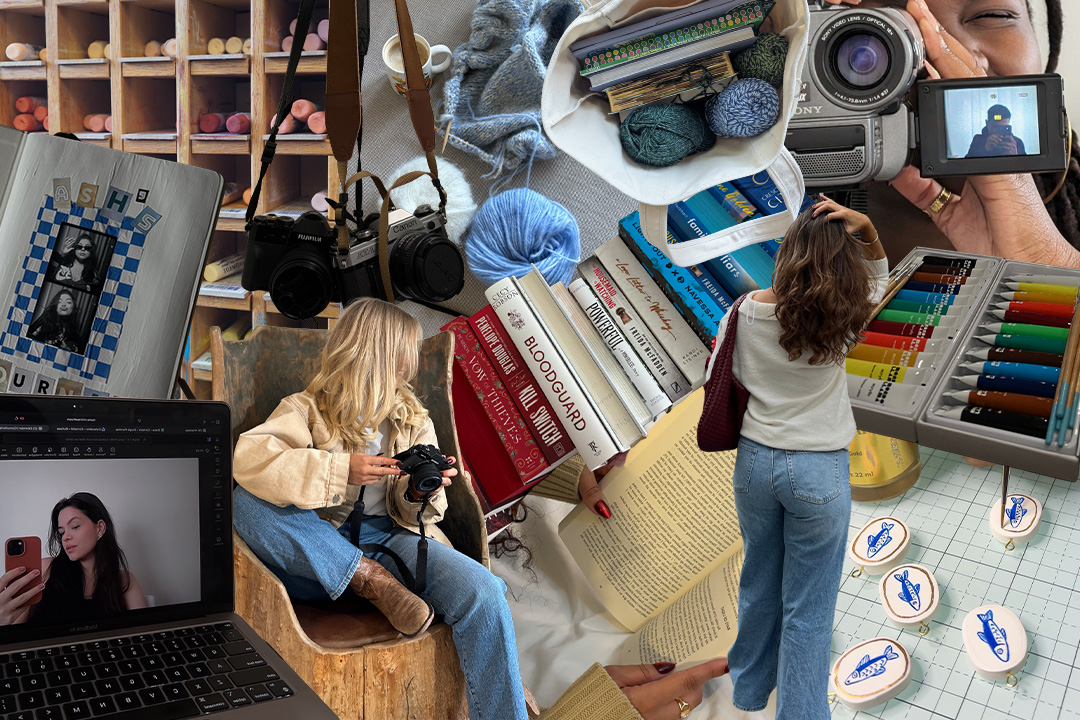
At the start of the year, I embarked on a little expedition of reinvention. I was feeling determined to connect with new sides of myself this year. So I did what any self-improvement-curious adult who lives in the thick of the digital-media forest does: I tried a bunch of hobbies—with hopes I would discover something new about myself. That is, until my perfectionist self stole the mic and ruined the whole thing, turning each new hobby into the most stressful task ever.
Because as loud as my ambitious heart might have felt in January, my over-corrective shadow was louder, stalking me intensely with a sharp red pen, clicked and ready to critique every second of it. Sure, I read—but not without making sure I hit that page number goal. I journal—but not unless I can find the words no other person has ever dared to write before. I craft, yes—but it simply has to be Etsy storefront-worthy, or I hate it. If it doesn’t bend the bar of expectation into some sort of impossible balloon animal, I immediately get frustrated—and sometimes even give up entirely.
Somewhere along the way, the whole point of hobbies (joy!) got edited out. The fun part got sanded down until hobbies became just another random productivity flex I can mentally check off. This is when I realized that in order to enjoy hobbies, I would have to hijack my perfectionist system entirely.
I want to give the mic back to a version of me who once loved her hobbies as a kid, simply because they were fun. No expectations, no tracking, no pressure to monetize or share results online. Just doing something purely for the joy of it. So, my new goal for 2026? Not to do hobbies, per se, but to be so spectacularly, unapologetically, almost impressively bad at them that they become fun again. Read on for the simple ways I’m letting myself be bad at my hobbies and slowly reclaiming the joy of them again in 2026:
Why perfectionism makes my hobbies so stressful
The best creative moments require some form of vulnerability. So for most people, getting messy with an idea or creative activity can be uncomfortable at times, sure. But for a perfectionist, being vulnerable is a next-level kind of itch. If it doesn’t come with some sort of gold star or validation for my efforts, my brain will immediately ask the question: Why are we even doing this? I know, of course, that this is very flawed logic, but perfectionism keeps me in a chokehold. Which is why doing any sort of activity just for fun can sometimes feel impossible.
Every brush stroke or journal entry becomes an internal performance review, and every attempt at a new side quest comes with a built-in critique: Is this good enough? If you’re a perfectionist, the freedom to explore, fail, or enjoy the process disappears almost entirely. Even something as simple as knitting, painting, or journaling can feel like trying to dream in a pressure cooker.
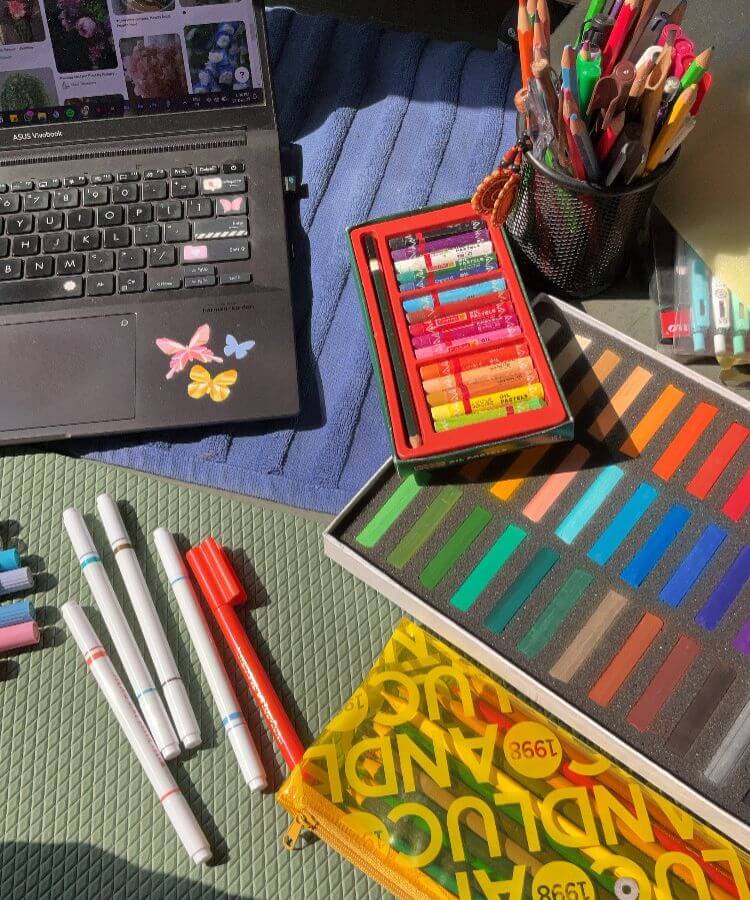
Reuniting with the joys of hobbies again
I remember when I was in elementary school, I used to write up fictional worlds for fun in a little notebook, with no real doubt or worry if I was “good” at it or not. The exploration felt exciting in itself because it was built on wonder: What might I find? What might I create? But then, I went to college, got my first big-girl job, and that wonder was replaced with a fear of judgment for even wondering at all: What if I’m bad at it? What if I don’t find what I’m looking for? What if they think what I do is mediocre?
As an ex-workaholic who’s new to the hobby game, I’m just now learning that it doesn’t have to be so goddamn stressful. I just need to get a little (a lot) messier with it. Now, I’m training myself to be OK with—maybe even get good at—being bad at something.
How I’m getting good at being bad at hobbies
Alongside my newfound hobbies, I decided to try a radical experiment: to teach myself to be comfortable with being absolutely atrocious at them. The goal: to reconnect me with the reasons why I loved having hobbies in the first place. Here are five simple yet effective ways I’m learning to be bad at my hobbies… on purpose.
1. Setting time limits
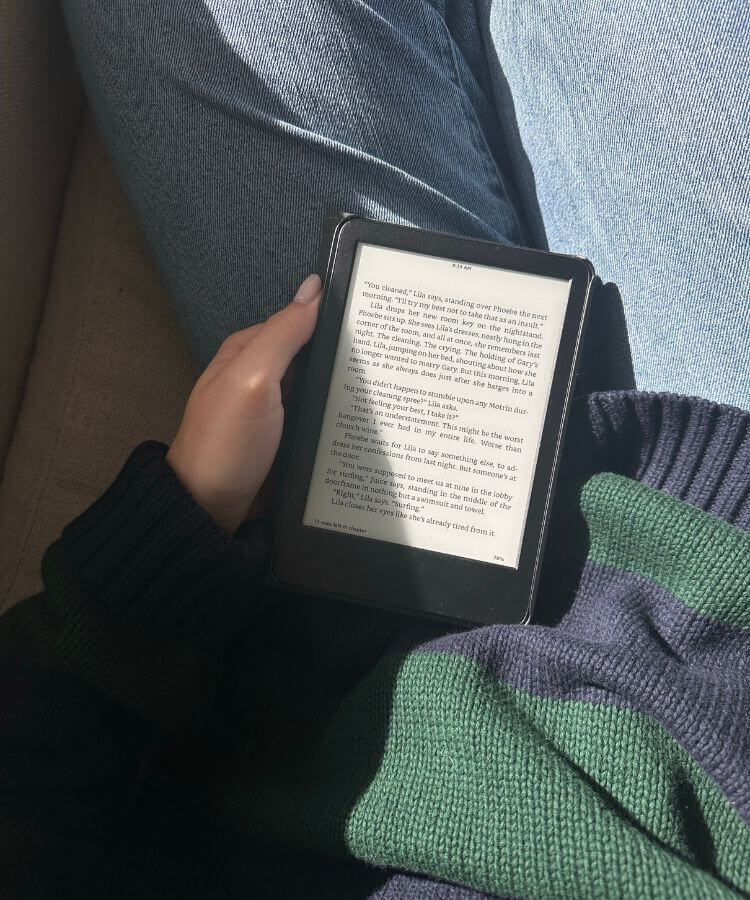
I am trying to dive more fully into books as one of my hobbies this year. But as a perfectionist, I often find myself turning reading into a task to check off. It becomes more about the sense of accomplishment I feel when completing a chapter, rather than the enjoyment of the book itself.
If this is something you struggle with, too, try setting a timer for the amount of time you want to do the activity. For example, if you’re picking up a book, decide how long you actually want to read—30 minutes before bed, 20 minutes on your lunch break—and when the timer goes off, you stop. Whether it takes you to the end of a chapter or right in the middle of one, you close the book.
I’ve been doing this lately, and it’s wild how it rewires your brain to actually get lost in the read instead of obsessing over finishing a chapter. Full disclosure: It’s annoying when you’re in the middle of a juicy part. However, enjoying the book for what it is versus the page count is the good-for-you part that helps with my hyper-fixation.
2. Stopping a project before it’s “finished”
If you get way too into crafts because every detail must be perfect before you can consider it finished, this tip is for you. Instead of completing your masterpiece in full, stop before it’s “done” on purpose. Weirdly, this trains your brain to find joy in doing the thing, instead of chasing the dopamine hit from finishing it.
I’m personally experimenting with this right now in the “love letters” I send through a nonprofit I volunteer with. I love getting cute and sticker-y with them, but instead of obsessing over making each one perfectly polished, I leave some a little unfinished. It’s oddly satisfying—and this way, I get to experience the messy, playful part of creating without letting my perfectionism hijack it.
“In an online culture that forcefully nudges us to monetize, share, brand, and perfect every creative impulse, keeping something delightfully horrible—just for me—has felt radical.”
3. Celebrating the messes, not the wins
Failure is the backbone of success—any finance-bro career podcaster will tell you that—but it’s just as true for hobbies. Instead of only celebrating when you finally master something new, celebrate your brutal catastrophes, too. Don’t hide that disastrous drawing or wonky needlepoint fail. Instead, let it be a reminder that perfectionism isn’t the main idea here. The fact that you tried something new and explored is the whole point. Share your handiwork with friends if they need a laugh, or let those first attempts be satisfying landmarks you can look back on as your skills improve.
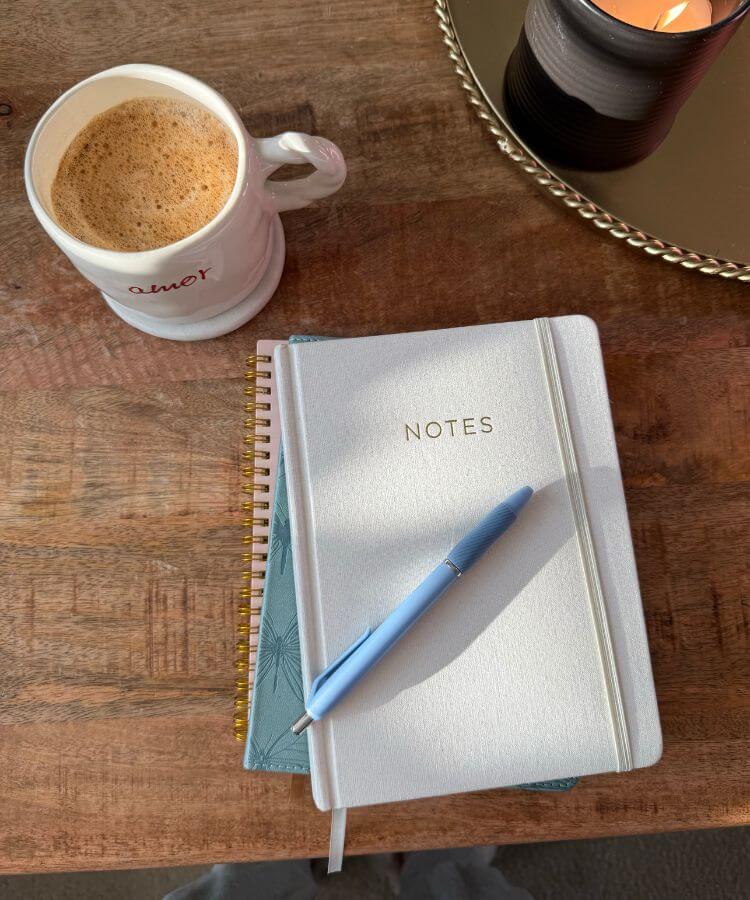
In my journal, for example, I (embarrassingly) used to try so hard to write something I felt was worthy of being in the book. But in my newfound efforts at being bad, I try to give myself space to just write whatever random, unfiltered thoughts pop into my head. I have some truly chaotic things written in there, but I love looking back at those entries. Ironically, they often feel more meaningful than the entries where I thought wayyy too hard about it. In striving for the unfiltered format, being “good” is less important than just putting pen to paper. I can dance in the badness or improve—maybe even unknowingly this way.
4. Not turning it into a side hustle
In today’s economy, turning that soap-making hobby into an Etsy account for a little extra spending money may sound pretty tempting. In most contexts, I’d probably say go for it. But if you want your hobbies to remain a source of joy, you may want to keep them just for yourself.
Monetizing your hobbies can help feed a perfectionist’s need to be great at something. But in doing so, you also run the risk of ruining the whole point of the hobby: to have FUN. Turning it into a business can pile on new layers of stress and expectations, thus defeating the original purpose. Keeping some activity that’s private and just mine—made for fun—reintroduces the plot again and helps mute that perfectionist mic. I can knit a gloriously lopsided scarf, paint a terribly disproportionate portrait, and get lost in doing it just for me.
5. Breaking the “how-to” guidelines
Following online tutorials is a great starting point for tackling new hobbies. But when it comes to things like craft projects, I always find myself pausing the TikTok video 30 times while trying to match my design to the tutorial perfectly. Suddenly, I feel overwhelmed trying to recreate something someone else made—replicating instead of creating. But by making these how-to rules optional, I give myself more space to lean into my own curiosity and creativity. That’s where the best part of it is!

How this messy mindset has helped me so far
The lesson here? It’s very easy to say you’re doing something “just for fun.” It’s much harder when you’re a perfectionist who secretly wants to win at journaling (or knitting, or watercoloring). I’ve learned that if I don’t consciously adopt a messy mindset, my brain will turn anything into a performance review or KPI.
These mental switches have been small but mighty tools in finding my way out of that spiral. They don’t magically silence my inner critic (she’s still very loud and very well-funded), but little shifts like this remind me that there is another way to think. That fun is still available to me, if I’m willing to be purposefully messy with it. I can still choose curiosity over control, even if my brain wants to say otherwise.
In an online culture that forcefully nudges us to monetize, share, brand, and perfect every creative impulse, keeping something delightfully horrible—just for me—has felt radical. Ironically, I’ve found that I’m becoming a better reader, a better writer, and a better hobbyist by simply allowing myself to be terrible at each of them. Let this be your sign to go get messy.

Madigan Will, Assistant Editor
As an Assistant Editor for The Everygirl, Madigan writes and edits content for every topic under the digital media sun. As the oldest of four siblings, she enjoys utilizing her big sister persona to connect and inspire readers—helping them discover new ways to maximize their everyday.
Feature graphic images credited to: Emily Patnaude | Dupe, Haley Maves | Dupe, Rayanne Walters | Dupe, Sarah Groeschen | Dupe, Ash Jimenez | Dupe, Madison Hoopman | Dupe, Vera Kent | Dupe, Alexa Beas | Dupe, Chloe G | Dupe, Mariana Ramalho | Dupe, Solacera’s Garden | Dupe, Spencer Wirkkala | Dupe, Luana Meira | Dupe
