

As I’ve turned the corner into my late 20s and grappled with the general state of the world, the past couple of years have had me waking up feeling like I look more tired than I used to. While I don’t think this is uncommon—I think I’d be hard-pressed to find someone who says they love their under-eye area—dark circles, hollowness, and fine lines under the eyes are frustrating, and can feel particularly hard to tackle. My algorithms sniffed out my newfound insecurity, and about a year ago, started delivering me before-and-after videos of influencers claiming they found the golden ticket to under-eyes that perpetually looked like they got 10 hours of REM. Enter: platelet-rich plasma (PRP) therapy.
PRP first began getting buzz back in 2013, when Kim Kardashian famously posted a bloody-faced selfie that came from a “vampire facial,” which included microneedling followed by a mask of platelet-rich plasma to boost cell turnover. Using your own blood in a skincare treatment sounds like the stuff of sci-fi novels, but the benefits of PRP are actually pretty impressive. In the name of science (and to hopefully make my concealer restocks a little less frequent), I tried PRP on my under-eyes to see if they’d give me the bright-eyed look the internet claimed it would. Read on for my experience, plus everything you need to know about PRP.

Dr. Sachin Shridharani
Dr. Sachin Shridharani is a board-certified, Manhattan-based plastic surgeon and Chief Medical Officer at SkinSpirit. Dr. Shridharani has been featured in The New York Times, Harper’s Bazaar, Cosmopolitan Magazine, and more.

Brittony Croasdell, MS, FNP-BC, APRN
Brittony Croasdell is a nationally board-certified nurse practitioner, published author, and international trainer in aesthetic medicine. Brittony is also the co-owner of Fulcrum Aesthetics in Chicago.
What is PRP?
“PRP stands for platelet-rich plasma, and platelet-rich plasma therapy is basically a form of regenerative medicine that effectively harnesses and even amplifies the natural growth factors that are found in our blood cells to help heal damaged or aging tissue,” Dr. Shridharani, a board-certified plastic surgeon and the Chief Medical Officer at SkinSpirit, explains. “Basically, plasma is the liquid portion of whole blood. It gives the medium for the red blood cells, white blood cells, and platelets to circulate through the body. Platelets, which are also known as thrombocytes, are blood cells that cause blood clots and other growth and healing functions. So basically, through PRP, we’re harnessing, removing, and separating the healing growth factor elements in the liquid form and then injecting it into the tissue.”
Is PRP better for the under-eyes than filler?
While PRP therapy can be used on virtually any tissue on the body, the treatment has gone viral across social media as a more effective alternative to under-eye filler. According to Dr. Shridharani, though, under-eye filler and PRP aren’t particularly similar. “[The under-eye skin] is arguably the thinnest skin in the human body. PRP injections help rejuvenate the skin by thickening it and improving its overall quality,” he explains. “If we inject areas with slightly deeper tissue, we can create some improvements in [signs of aging], but it’s not like a filler; we aren’t injecting this into the tear troughs and thinking that area will suddenly appear smooth. PRP is used for an improvement in tissue quality.”
In comparison to filler, which provides volume in areas where it’s injected, board-certified nurse practitioner Brittony Croasdell explains that PRP therapy can help rejuvenate the under-eyes from the inside, out. “Unlike traditional fillers, PRP works at a cellular level to stimulate collagen production, improve blood circulation, and enhance skin rejuvenation,” she says.
Does PRP hurt?
If the thought of injecting a needle into your under-eye area raises concerns about the potential of a particularly painful treatment, fear not: PRP is generally performed after numbing the area so discomfort is kept to a minimum. “Most can expect slight pressure, a small poke, and maybe a slight stinging sensation at most,” explains Croasdell.
When I received my PRP treatment, I was numbed topically for about 20 minutes prior to injections. I did feel a slight pinch at the injection sites, but the most discomfort I experienced was the stinging that I felt for about 10 seconds after. It definitely wasn’t comfortable or something I’d want to go through every day, but on a scale of 1-10, I’d rate the discomfort at about a five. Especially given that the entire treatment only took about five minutes, I wouldn’t hesitate to go through it again.
Are there any cons of under-eye PRP?
As with any treatment, Dr. Shridharani explains that PRP can come with downsides. “The main con is that you have to get your blood drawn,” he says. Unfortunately, PRP can also require multiple treatments to achieve the desired results. “It isn’t a one-and-done or permanent treatment,” Dr. Shridharani says. “In general, the skin is always aging, so to maintain this outcome, we want to be using PRP in a regenerative capacity a few times a year to help improve the overall tissue quality.”
How many sessions of under-eye PRP does it take to see results?
According to Dr. Shridharani, it can take multiple sessions of PRP to achieve the results patients are looking for. “Usually, we can start to see results anywhere between 2-4 treatment cycles, but it’s heavily dependent on genetics and the state of the current tissue.” he says. “I recommend patients get 3-6 cycles spaced out over the course of 3-9 months, then give the treated area a rest. Once the skin is healed, you can see the full benefits.”
Croasdell explains that it can take patience to see the visible benefits of PRP. “Unlike fillers or Botox, PRP works by stimulating natural collagen production, meaning visible results take time and often require multiple sessions for optimal improvement,” she says. “While PRP enhances skin quality and elasticity, it does not provide immediate volume replacement, which makes it less effective for deep hollows or significant volume loss.”
How much does a PRP under-eye treatment cost?
The cost of a session of under-eye PRP varies based on location and practitioner, but typically ranges from around $500 to $2,000 per treatment.
Does PRP work for everyone?
Croasdell explains that when trying to gauge expectations of how effective PRP will be for you, several factors come into play. “Age, overall health, skin condition, and underlying medical conditions can influence the body’s ability to utilize growth factors and regenerate tissue,” she says. “Younger patients with better overall health and strong healing responses will see more noticeable results, whereas individuals with poor circulation, chronic illnesses, or lifestyle factors like smoking may experience less dramatic improvements. PRP can be highly effective, but results vary from person to person.”
My experience getting under-eye PRP
For my under-eye PRP, I went to Fulcrum Aesthetics in Chicago, where co-founder Brittony Croasdell performed my treatment. At the start of my appointment, she walked me through the steps of what was about to happen and explained that I’d likely be bruised for a few days (and also offered to re-schedule if I couldn’t manage the downtime that week). From there, she applied a topical numbing cream to my under-eye area, then took my blood to facility’s centrifuge to separate out the platelet-rich plasma that would be injected.
After about 20 minutes, once I was good and numb, Croasdell returned and injected the PRP at a few different points underneath my eyes. Being numb prevented me from feeling the actual injections, but I did feel a pretty moderate amount of stinging in each area that was treated. It subsided after about 20 seconds, but it definitely wasn’t comfortable. The sensation of the treatment as a whole was a bit more bizarre then I expected; since it involves literally injecting a liquid beneath the surface of the skin, the area temporarily swells up, and there was a point where I was so swollen that I couldn’t open my eyes. This was extremely temporary and subsided after a few minutes, but in comparison to other treatments I’ve tried, PRP is definitely one of the weirder-feeling ones.
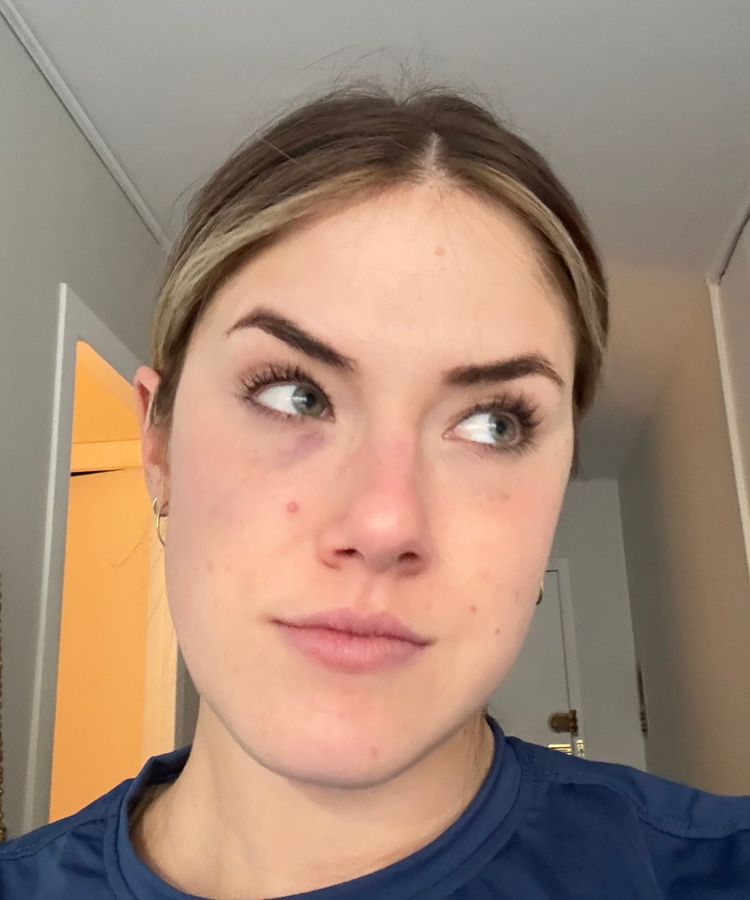
Immediately after PRP, I was quite red, but found that most of my redness subsided within the hour. (I actually looked so normal that I was comfortable going to a friend’s apartment a couple of hours later.) The next morning, I woke up feeling like the skin under my eyes looked incredible, but was warned by Croasdell that I might feel this way due to the swelling that can come as a side effect. I was only slightly bruised when I woke up, but the bruising did get progressively over the next few days and stuck around for about a week.
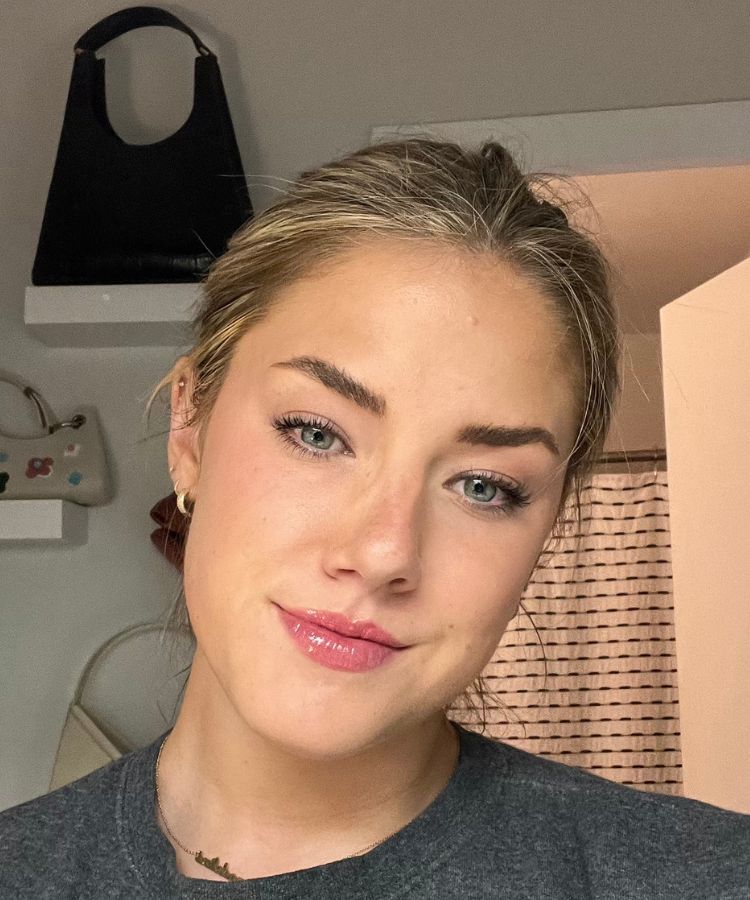

During my treatment, Croasdell explained to me that it would likely take about 4-6 weeks to notice the benefits of the treatment, and sure enough, about a month after my PRP treatment, I was doing my makeup and noticed that I suddenly looked… fresher. The darkness and fine lines I felt had gotten more prominent had improved quite noticeably, and I felt like the skin underneath my eyes looked more refreshed and awake. Since I’m in my late 20s (and elected for the treatment in the name of research rather than out of any major concern about my under-eyes), I opted to stick with just the one treatment to feel out if it would make a difference in the appearance of my skin. It’s been about five months since my treatment and I feel that my under-eyes are still reaping the benefits of my PRP session, but am looking forward to going in for additional treatments when I feel like they need a little pick-me-up.

Madeline Galassi, Senior Fashion & Beauty Editor
Madeline Galassi is the Fashion & Beauty Editor at The Everygirl, where she oversees the fashion and beauty categories of the site. She brainstorms, writes, and edits stories across a broad range of topics including trend reports, product reviews, celebrity style, and more. She’s always keeping a pulse on the latest trends to create timely, exciting content for our readers.
Feature graphic images credited to: Dima Solomin | Unsplash, Faruk Tokluoğlu | Unsplash (1, 2, 3)
