



Wellness has cycled through its obsessions: first it was the gut, then hormones, then the lymphatic and nervous systems. But lately, the focus is on what lies underneath it all. While nothing new, it’s taking over TikTok routines and expert conversations alike: fascia. What used to be written off as nothing more than filler tissue surgeons cut through in anatomy class videos might actually be the missing link, tying everything from digestion to lymphatic flow to hormone regulation.
A continuous, web-like network of connective tissue, fascia weaves through the entire body, wrapping around and connecting every muscle, organ, and nerve from head to toe. “It holds your body together,” explained Ashley Black, award-winning fasciologist and creator of the FasciaBlaster, on The Everygirl Podcast. And when it’s unhealthy, you feel it: that nagging tension in your shoulders and low back, stiffness in your hips, or worse, chronic pain. As TikTok creator and Yin Yoga instructor Kat put it in a viral video, when fascia becomes restricted, “you feel stiff and achy no matter how much you stretch.” Ahead, experts unpack exactly what fascia is and why caring for it might be the key to whole-body wellness.
Meet The Experts
At The Everygirl, we believe that wellness advice should be grounded in accurate, science-backed information to ensure our readers can make informed decisions about their health and well-being. That’s why we prioritize consulting trusted, credible experts—so every piece of content is both reliable and empowering.

Ashley Black is an award-winning fasciologist and creator of the FasciaBlaster. A global expert in the system of the body called fascia—the energetic quantum web that exists within all of us—her obsession with helping others look and feel amazing has led to the invention and commercialization of her “Miracle Fascia Tools,” a 10-figure empire, 10 million social followers, and scientific acclaim.

Chancy Gill and Jaclyn Cosper are co-founders of Syringa Bodywork and experts in myofascial massage, lymphatic drainage, and cupping. With experience in myofascial massage techniques and barefoot (ashiatsu) modalities, they share their passion by teaching myofascial barefoot massage and helping other therapists advance their skills.
What Is Fascia?
“Think of fascia as your body’s inner web,” Black said. It’s often compared to the pith of an orange: beneath the outer skin, the thin, white layer threads each segment, keeping the entire structure together. Fascia works in a similar way, wrapping around muscles, organs, nerves, blood vessels, and bones—holding it all in place. But it does so much more than that.
How Fascia Moves—and Gets Stuck
Fascia isn’t passive and just along for the ride—it plays an active role in how your body functions day to day. “Healthy fascia glides,” explained Chancy Gill and Jackie Cosper, co-founders of Syringa Bodywork and experts in myofascial massage. “The layers slide against one another so your muscles can move freely and your body can adapt to whatever you’re asking it to do.” When fascia is healthy, it’s flexible and fluid, allowing for smoother movement, better posture, and an overall sense of ease in the body. When it’s not, its layers can get stuck, forming restrictions and adhesions that can make it feel like your body is working against you: tight, tense, and out of sync.
Fascial restriction rarely stays put. Like a snag in a sweater, when one thread gets tugged, the tension doesn’t stay in one place; it shifts and spreads, changing the shape of the whole. “Because the system runs continuously throughout the body, a restriction in one place tends to create tension or compensation somewhere else entirely,” Gill and Cosper said. Knee pain might trace back to tight hips; headaches can stem from limitations in the neck and upper back.
Why It’s More Than Just Support
You know that feeling of tightness or stiffness in places you can’t quite pinpoint, reach, or stretch away? Chances are it’s your fascia. Because it’s not just structural, but a primary sensory organ packed with six times more nerve endings than muscle, fascia senses everything (including your thoughts!), and responds to physical and emotional stress. “It’s in constant communication with your nervous system, and researchers are beginning to understand that much chronic pain may be rooted in fascial restriction, not just muscle tightness or joint problems,” Gill and Cosper said.
Black describes fascia as the body’s “life force,” the electricity system of the body that powers our cells and delivers nutrients and oxygen throughout the body. “Fascia directly impacts every nook and cranny of the body, and we are just beginning to get a glimpse at the role of fascia in our overall health, beauty, and longevity.”
What Are the Most Common Signs of Unhealthy Fascia?
One of the simplest ways to check in with your fascia? What Black calls the “P Test.” If you can’t easily pinch, pull, or pick up your skin, your fascia may be “glued down” and sending an SOS.
Fascia is constantly responding to how we move—or don’t. Long hours at your desk, staring down at your phone, dehydration, poor sleep, or chronic stress can all take a toll. Over time, fascia adapts to those patterns, setting the stage for inflammation, stiffness, and limited mobility.
So how can you tell if it’s fascia, and not a muscle or joint issue? Gill and Cosper highlight some red flags:
- Chronic tension that never fully goes away. Stubborn tightness between the shoulder blades or across the low back that keeps coming back, even after stretching or massage.
- Limited mobility that doesn’t match your fitness level or age. You’re strong and active, but you still can’t move freely. Maybe your body feels harder to move than it used to, or certain spots feel tender, tight, or stuck.
- Morning stiffness. After hours of stillness, fascial tissue is at its least hydrated and most restricted, often causing that first-thing-in-the-morning ache
- Chronic pain with no clear imaging findings. Fascial restriction doesn’t show up on a standard MRI or X-ray, which is partly why it gets missed.
- Recurring strains in the same spot. This can mean the surrounding fascia never fully recovered from a previous injury.
- Post-surgical restrictions. Fascial adhesions can limit function and cause pain for months or years after a procedure.
- Locked-in postural patterns. If you keep rounding forward or rotating to one side and nothing seems to correct it, fascia is usually part of the story.
Since fascia is always talking to your nervous and lymphatic systems, its impact goes beyond movement. Puffiness, sluggish circulation, low energy, or that heavy, fatigued feeling—it can all be tied back to how well your fascia is functioning.
How to Support Your Fascia
Fascia isn’t like muscle—you can’t stretch it out until it loosens up. Rather than general stretching, Gill and Cosper said that fascia responds best to slow, sustained, and targeted work. Here’s how that can look:
Move Often (and in Varied Ways)
The most important thing you can do for your fascia is to stay active, but not in a one-and-done, all-or-nothing approach. The goal: Avoid staying in one position for too long. “Long stretches of sitting followed by one hard workout isn’t enough to keep fascial tissue healthy and gliding,” Gill and Cosper say. “Small movements woven through your day matter more than most people think.” Fascia likes to mix it up with frequent, varied movement throughout the day—whether it’s resistance training, walking, dancing, tennis, swimming, bouncing movements like rebounding and jump roping, or slow, dynamic stretches like walking lunges, squats, and arm circles. Because warmth makes fascia more pliable, bonus points if you throw in a hot bath, sauna session, or some time with a heating pad before you move to prep your body.
Stay Hydrated
Fascia is largely water-based, and chronically dehydrated fascial tissue is much more prone to restriction. But drinking enough water is one of the simplest and most overlooked things you can do to keep fascia supple and resilient. Try starting your morning with a glass of water (yes, before your cup of coffee), adding water-rich foods like cucumber, celery, and strawberries into your meals (or make it a no-brainer by blending them into a smoothie), and level up your hydration with electrolytes (just steer clear of sugary options with a ton of additives).
Try Using a Tool
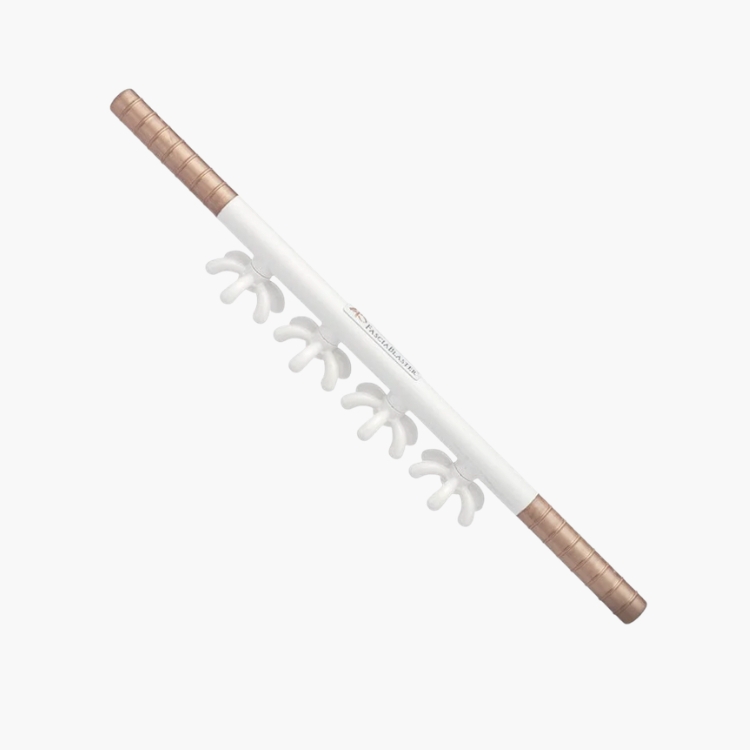
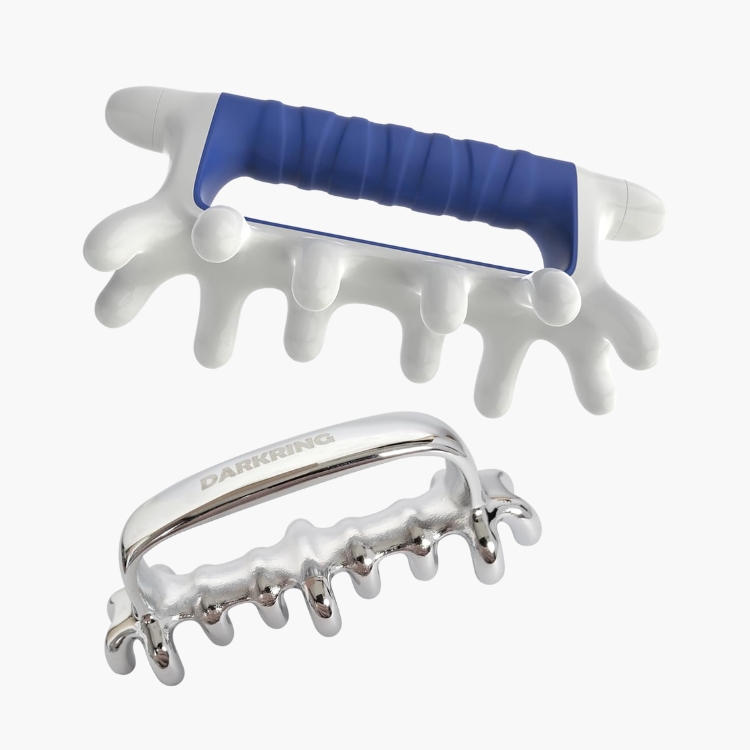
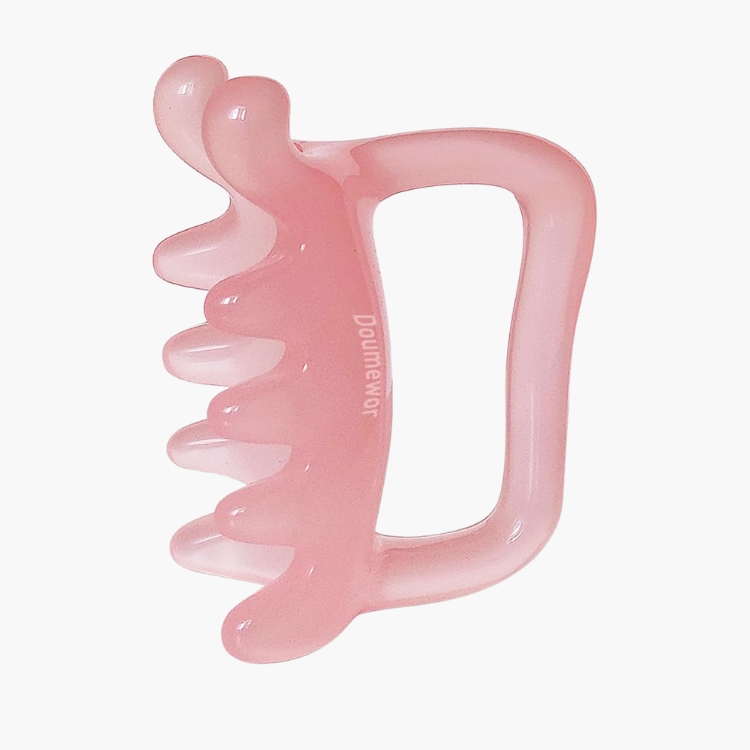
Black’s mantra? “Brush your teeth, brush your hair, brush your fascia,” she said. “FasciaBlasting is one of the low-hanging fruits of well-being, like drinking water and getting a good night’s sleep.” Apply the tool to bare skin with a little oil, and use light, brisk strokes to help the tissue open naturally. No need to dig in or force it—it’s all in the consistency. Just a few minutes a day, 3–5 times a week, and Black said it’ll improve your life dramatically.
Know When to Call in Backup
Sometimes your fascia needs a trained touch. “There are patterns of restriction, especially after injury or surgery, or in tissue that has been held tightly for years, that self-care tools simply can’t reach on their own,” Gill and Cosper shared. That’s when you call in a pro who knows fascia inside and out and can work at a depth and precision you can’t quite get on your own.


Katherine Chang, Wellness Staff Writer
Katherine Chang is The Everygirl’s Wellness Staff Writer with over five years of experience in the health and wellness space. She navigates the latest wellness topics and trends through studies, articles, and is always first in line to try them firsthand.
