



The last few years have been filled with ups and downs for professionals everywhere. Phenomena like the “Forever Layoff” and the “Great Shrinking” point to an unstable job market—and, honestly, it’s been exhausting. Now, there’s yet another workplace trend taking over headlines: the “Great Flattening.” Middle managers, brace yourselves—this shift is said to eliminate your roles altogether.
But what exactly is the “Great Flattening,” and what does it mean for middle managers and, consequently, their teams? I tapped career experts for everything you need to know about the Great Flattening trend. Ahead, learn what the “Great Flattening” is, what’s causing it, how it’s impacting the workforce, and how to navigate it—because yes, it could affect you even if you’re not a middle manager.

Kimberly Brown
Kimberly Brown is a globally recognized career and leadership strategist, bestselling author, and international keynote speaker. As the founder and CEO of Brown Leadership®, a premier learning and development firm, she helps mid-career and senior professionals amplify their brands, accelerate growth, and drive performance. A trusted expert, Kimberly’s work has been featured in The Wall Street Journal, Harvard Business Review, Forbes, CNBC, NPR, and more.
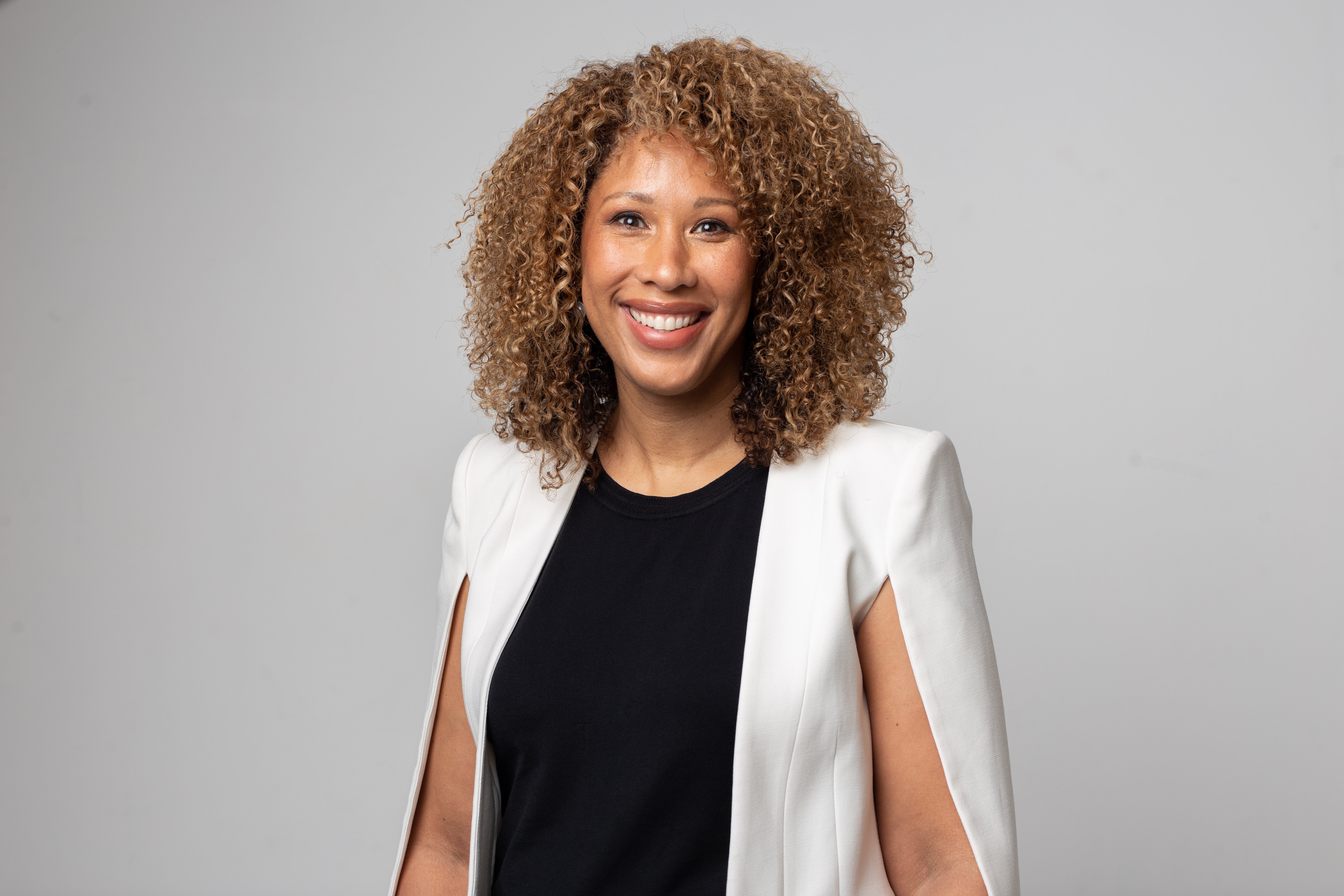
Lisa Orbé-Austin, PhD
Dr. Lisa Orbé-Austin is a licensed psychologist, executive coach, and best-selling author specializing in career advancement, leadership development, and imposter syndrome. Her expertise is regularly sought by the media, and she has appeared in outlets such as the Financial Times, the TODAY show, Good Morning America, Forbes, HuffPost, Refinery29, and more.
What is the Great Flattening?
The Great Flattening refers to a growing trend among companies that are cutting back or eliminating middle management roles to streamline how work gets done. Psychologist and Executive Coach Lisa Orbé-Austin, PhD, says this consequently flattens a company’s organizational chart, which is where the term earns its namesake. Removing layers of management is thought to improve overall speed and efficiency while also reducing overhead costs. This is extremely alluring to companies trying to remain profitable in a volatile job market plagued by economic uncertainty.
To put it in layman’s terms, “The Great Flattening is what happens when companies decide that middle management is more of a bottleneck than a bridge,” according to Career Expert and Leadership Strategist Kimberly Brown. “A role once representing the pinnacle of career growth is now treated as optional overhead.”
What is causing the Great Flattening?
According to Orbé-Austin, “The rise of generative AI is one of the primary drivers of this flattening.” She explained that the integration of AI at work has led companies to believe they no longer need so many layers of management. It can perform the tasks middle managers have long been responsible for, including scheduling, resource allocation, and so forth. Plus, digital collaboration platforms like Microsoft Teams, Slack, and Asana have made it easier for senior leaders to oversee larger teams directly, rather than relying on a thick managerial layer.
“Companies are now correcting the over-hiring they did after the pandemic… when it comes time to make cuts, middle managers are on the chopping block.”
Additionally, trends like “conscious unbossing” and “career minimalism” are exacerbating the shift away from traditional hierarchical management structures. Fewer workers want management roles, and according to Brown, “CEOs believe flatter structures make faster companies” anyway. It seems only natural that these two things combined would result in a flattening in the workplace.
Not to mention, reducing headcount is beneficial for a company’s monetary bottom line. On top of mitigating economic uncertainty, Brown says companies are now correcting the over-hiring they did after the pandemic. And when it comes time to make cuts, middle managers are on the chopping block. The way higher-ups see it, middle management roles can be replaced with automation, and the tasks that can’t be can be allocated to another employee.
How the Great Flattening will impact the workforce
Careers will feel stalled
The more middle management positions disappear, the harder it is to climb the career ladder. Consequently, Orbé-Austin predicts the Great Flattening will leave many employees feeling stalled in their careers. Think about it: You can’t scale upward into a position that doesn’t exist anymore with your current employer. And landing a more senior role elsewhere without managerial experience won’t be easy. It’s a lose-lose situation. Likewise, Orbé-Austin says workers who take on the responsibilities of middle management will feel stuck in a role that doesn’t fairly compensate them, whether that’s represented monetarily or through their job title.
Employees will feel exposed and unsure of their future
Similarly, while companies may see immediate payoff from this restructuring, this workplace model is not sustainable. “Flattening a structure can make an organization look more efficient overnight, but it also redistributes pressure in ways many leaders underestimate,” Business Expert at LLC.org Sam Taylor says. “Employees may feel more empowered, but they can also feel more exposed.”
“Flattening a structure can make an organization look more efficient overnight, but it also redistributes pressure in ways many leaders underestimate.”
“Middle managers are the connective tissue of most organizations—they translate vision into action, develop talent, and provide the day-to-day coaching that keeps teams moving,” Brown explained. When middle managers are gone, employees are left without an advocate. Who will go to bat for them when needed, champion their success, and nominate them for awards and promotions? Professionals everywhere are already facing less clarity around their career fate, and the Great Flattening will only inflame this.
READ: The 20/30/40 Framework Explains Why You’re Spiraling About Your Career
Widespread burnout is likely
“The Great Flattening promises efficiency, but many companies will discover they’ve traded speed for stability,” Brown explained. This trade-off is costly because workers at all levels will have to take on more than they can handle. Companies are already operating with leaner teams, with employees and leaders alike taking on more responsibility. The Great Flattening will compound this, and widespread burnout will likely happen as a result. In reality, it may backfire. Burnout could ultimately erode the very efficiency companies are trying to build.
How to survive the Great Flattening
Trying to survive the Great Flattening might sound like trying to fight an uphill battle, but Brown says it can be done. Above all else, she emphasizes making yourself indispensable to your employer. Rest assured, this doesn’t mean working harder and stretching yourself so thin that your performance suffers. Rather, it means strategically conveying your value to your colleagues. Here are a few ways you can do that, whether you’re a middle manager or a team member losing their direct manager.
Document and communicate your impact
Keeping a document of all your contributions and the impacts you’ve made is by far the easiest way to communicate your value. That way, you can casually flex these wins when the opportunity presents itself. This could look like sliding a “here’s what my team did this week…” into a weekly debrief with your boss or clearly articulating your impact during performance reviews.
As Brown puts it, “In a flatter organization, you have to be your own advocate, your own strategist, and your own visibility engine.” Similarly, she stresses: “Get clear on the unique value you bring, and learn how to articulate it with confidence.” Tracking your contributions and performance metrics will make communicating what you bring to the table much easier.
Build relationships that make your value visible
Building relationships is just as critical. Brown suggests networking with colleagues both above and below your current role, while also making an effort to build relationships with senior leaders. This can be accomplished by consistently delivering high-quality work, practicing active listening, being a proactive problem-solver, and volunteering for projects led by senior management for more exposure.
“In a flatter organization, you have to be your own advocate, your own strategist, and your own visibility engine.”
This will give you social capital and make your value known across your workplace. “The employees who will thrive in this new structure are problem-solvers, not just task-completers,” Brown clarified. For middle managers, this also means reinforcing your role as a critical link. Work to maintain trust with your team while making your impact visible to leadership.
Upskill—especially when it comes to AI
Additionally, Orbé-Austin suggests upskilling and strengthening your AI literacy. Not only will this communicate that you’re able to adapt in an evolving work environment, but that you’re also able to effectively navigate change. For managers, it also signals that you’re equipped to lead a team through that change. This will solidify that you’re the kind of employee who never stops learning and growing. Companies need that adaptability and motivation now more than ever.
Speak up before burnout hits
Arguably most importantly, know how and when to communicate when you’re feeling stretched thin. A flatter structure removes bodies from the office, but it doesn’t remove work. If you feel like you all of a sudden have too much on your plate, speak up. Remember that transparency is respected in today’s workforce. Odds are, your team would rather you communicate that you need more time than turn in work that isn’t your best effort.
Ultimately, the Great Flattening is another sign that the workforce is undergoing major changes. But while it’s natural to fear change, this might not be a bad thing. If anything, this shift could be the clearest sign yet that companies are finally moving toward what workers have been demanding: more flexibility and a real share of power.
Staying up-to-date on workplace trends is critical in our current market. Here are a few more you should know about:
- The “Ghost Growth” Workplace Trend Will Steal Your Time, Your Energy, and Your Raise
- The “Confidence Theater” Trend Is Tanking Professional Reputations—Here’s How to Avoid It
- Experts Say “Shift Sulking” May Be the Biggest, Most Damaging Workplace Trend of the Year

Arianna Reardon, Contributing Writer
Arianna is a freelance writer and journalist, and the self-proclaimed hot and dirty martini queen. At The Everygirl, Arianna uses her authenticity and relatability to empower, inspire, and motivate women everywhere. Whether she’s writing about sex and relationships, career and finance, beauty and fashion, wellness, or home and living, Arianna’s passion shines through in all her work.
