


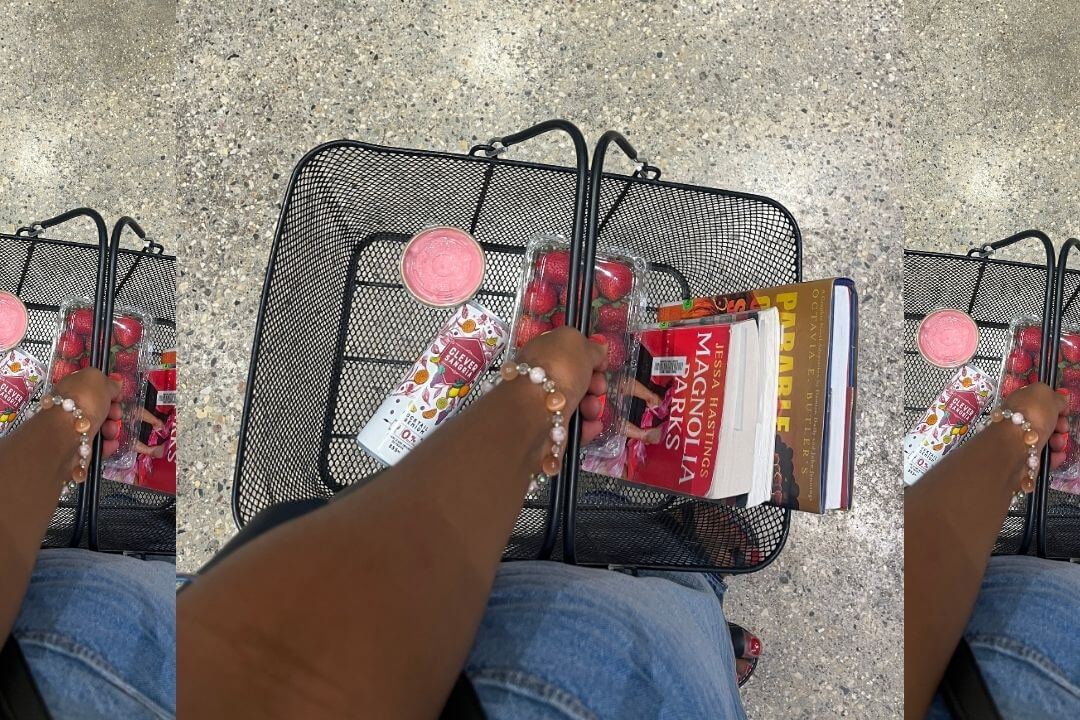
When the numbers in our bank accounts stay the same for what feels like forever or, worse, start to trend downward, we are often led to believe that we’re not earning enough. That reasoning, especially in our economic climate where inflation fatigue is running rampant, is not always inaccurate, but more often than not, it’s not our income that’s the problem; it’s our spending habits. Most of us don’t realize that we’re slowly but surely sacrificing our finances through repeated behaviors and purchasing patterns. Experts call these “savings leaks,” as they have the ability to quite literally drain our bank accounts little by little.
To learn more about savings leaks (read: detrimental money habits), I reached out to Tiana Patillo, CFP, a financial advisor manager at Vanguard, for her insight and advice. Ahead, learn what savings leaks are and why they’re so detrimental, common examples of these money habits, and how to identify your own savings leaks so you can actually start seeing progress in your accounts.

Tiana Patillo
Tiana Patillo serves as a High-Net-Worth Financial Advisor Manager in Vanguard’s Personal Wealth division. She began her financial services career in 2010 as an annuities specialist and joined Vanguard in 2012. Since then, she has held a variety of roles supporting clients with investment, retirement, and advisory services. Patillo enjoys building relationships, helping others work toward personal and financial success, and closing the financial literacy gap.
What are savings leaks?
“Savings leaks” are small, habitual expenses that quietly drain your income and hinder your ability to save. Whether it’s random under-$20 buys or long-running subscription payments, they’re the purchases that fall through the cracks. These are the purchases that often seem trivial on their own or have become so baked into our monthly expenses that we hardly notice them. You can think of them like small roof leaks: They are not catastrophic initially, just a drip from the ceiling, but they compound over time and are costly in the long run as the damage spreads and becomes structural.
Unlike one-time splurges that are intentional and visible in your bank account, savings leaks fly under the radar; it’s easy to write off a $6 coffee, an additional $15 monthly subscription, or sporadic Amazon buys when the purchases themselves don’t seem to make a huge dent in your finances. With time, though, they “reduce the money you have available to save and invest,” according to Patillo.
8 common savings leaks that cost you money
1. Convenience spending
Technology has made shopping more convenient than ever, but this convenience is a double-edged sword. On the one hand, getting groceries, food, and so forth delivered right to your doorstep comes in handy when you’re busy AF or exhausted. On the other hand, it’s easy to overlook the additional delivery fees and tip on top of the cost for the purchase itself; you can easily convince yourself that the extra charge is worth it because you don’t want the hassle or don’t feel like leaving your house. The problem with this is that paying an inflated cost for an item simply to have it delivered to your doorstep time and again adds up. Did you know that getting a meal delivered can cost up to 80 percent more than picking it up yourself?
2. Lifestyle creep
Earning a raise can make you feel like you have more breathing room in your budget, and while that may be true, it can also lull you into thinking you have more flexibility with your spending than you actually do. When this happens, “lifestyle creep” (a gradual increase in spending) occurs and slowly but surely chips away at your finances. “As your income rises, it’s natural to spend a little more, but new habits like regularly upgrading purchases or dining out more can turn into ongoing expenses,” Patillo explained.
3. Storing money in low-interest accounts
“Where you keep your savings matters, too,” Patillo said. She explained that storing your money in a low-interest bank account can be problematic, since inflation may outpace account growth and subsequently reduce purchasing power over the long term. When the interest you earn is minimal, prices rise faster than your account balance, and the money stored in it buys less over time. While this loss isn’t obvious on a daily level, it compounds quietly.
4. Paying banking and credit card fees
Paying unnecessary banking and credit card fees might seem like no big deal in the moment, but they accumulate quickly and slowly drain your funds. This includes anything from a monthly maintenance fee to have an account open with your lender, late payment fees, out-of-network ATM withdrawal fees, overdraft penalties, and the like. In these instances, you’re paying for something that gives you absolutely nothing in return, and overspending becomes normalized when fees become routine.
5. Underestimating subscription spending
According to Patillo, consumers, on average, underestimate monthly subscription spending by $133. “That’s nearly $1,600 a year that could otherwise go toward an emergency fund, a vacation, or retirement.” To be fair, it’s easy to see how this happens. You sign up for something once, agree to the terms and services, and bundle it into your pile of other recurring subscription charges.
Beyond cost, the issue here is that recurring charges inevitably get lost in the shuffle; they blend into your monthly budget and go unnoticed, and auto-renewals keep charging you without requiring a purchase decision. As a result, you pay for services you no longer use. It’s a vicious cycle that chips away at your finances every month.
6. Overbuying supplies
Most of us have been taught that buying in bulk, particularly buying groceries and household supplies in bulk, saves you more in the long run; the idea behind this is that being stocked up on something will prolong the time between trips to the store and subsequent purchases. It makes sense in theory, but the logic is flawed.
The reality is that buying in bulk only saves you money if you use the item before it expires, and extra produce, canned goods, cleaning supplies, and so forth often spoil or sit in a pantry collecting dust. Worse, overbuying creates clutter, which makes it harder to find certain items when you need them and consequently makes you more liable to purchase what you already have sitting in the back of a cupboard.
7. Overpaying for insurance
Overpaying for insurance is one of the easiest traps to fall into, namely because insurers across all categories gradually raise their prices over time and bank on you not checking or shopping around for different deals. The kicker is that your loyalty to your insurer isn’t rewarded, and you’re paying a higher premium for identical coverage that you could get for less elsewhere. While a slight price hike might seem inconsequential, it costs you hundreds of dollars more in the long run and continually siphons funds you could be funneling into savings, debt repayments, and so forth.
8. Justifying inexpensive indulgences
We all deserve a treat every once in a while, but frequently treating yourself to inexpensive indulgences often does more harm than good. For starters, it increases your financial output and decreases your financial input; you’re pulling from money that’s sitting in an account and slowly draining the balance, or taking it directly out of your paycheck and minimizing how much you have left to put toward savings and the like.
Worse, frequently justifying little treats, whether it’s a morning coffee or a new book, reinforces a pattern where indulging is the norm. All in all, buying small, low-cost items regularly to boost your mood or reward yourself is shortsighted. This doesn’t mean you should never treat yourself—just be careful how often you’re coming up with a reason to.
How to identify your own savings leaks
Track your spending for one month
Savings leaks usually hide in plain sight, so tracking your spending for at least one month is by far the easiest way to identify yours. “A simple spreadsheet with your income in one column and spending in another can show you exactly where your money is going,” Patillo said. Once you have that information, she suggests breaking your spending down into different categories. This will not only reveal where you’re spending more but also your buying behavior.
Evaluate your not-so-great money habits by determining the following: Are you spending more during certain times of the month? Are there emotional or situational triggers that lead you to spend more? For example, you might get takeout more after payday or indulge in more “little treats” during periods of high stress or boredom. By recognizing these things, you’ll be more conscious about your habits moving forward.

Compare your current spending to a previous period
Furthermore, compare your current spending to your spending six and 12 months ago. This will help you further identify where you may have fallen victim to lifestyle creep or changed your spending behavior. For example, you might now be spending an extra $100 on groceries each month because you’re buying pre-cooked meals and no longer meal-prepping lunch.
While you’re at it, go through your recurring charges with a fine-tooth comb. You might find that a subscription you only use sometimes hiked up its price substantially, which might finally push you to cancel it. If you’re unsure which expenses are worth keeping, Patillo recommends evaluating the cost against your long-term savings goals.
Create “joy anchors”
Eliminating indulgences as a whole is not the goal because it’s not sustainable. Rather, the goal is to find where you’re being wasteful with your money and pinpoint the areas and purchases that add meaning to your life. Creating “joy anchors”—planned, intentional purchases—can be helpful with the latter; This could look like allocating $200 seasonally to updating your capsule wardrobe. It’ll replace impulse spending and give you something to look forward to. And if you’re tempted to buy something besides a “joy anchor,” Patillo recommends giving yourself a 30-day pause. “If you still want it after a month and it fits your budget, you can make the purchase with more confidence.”
Treat your savings like a bill
Patillo emphasizes treating “building your savings like paying a regular bill.” Instead of putting away what’s left over, set aside funds ahead of time and do your best not to pull from them unless absolutely necessary. Patillo says that creating separate savings accounts for different priorities can be helpful with this; it’ll “allow you to track progress clearly and can make it easier to stay focused on what that money is meant for.” This, in turn, encourages you to spend your money more wisely. “Finally, consider keeping short-term savings in an account that earns a competitive yield,” Patillo said.
The bottom line
When it comes down to it, you don’t have to stop enjoying life to save more. Savings leaks affirm that small moves add up over time, and this means that making small, intentional shifts in your finances and how you spend money will make a world of difference. Ultimately, sealing up savings leaks boils down to finding the purchases and expenses that bring the most value to your life and letting go of the rest. If you can do that, your bank account will be all the better for it.

Arianna Reardon, Contributing Writer
Arianna is a freelance writer and journalist, and the self-proclaimed hot and dirty martini queen. At The Everygirl, Arianna uses her authenticity and relatability to empower, inspire, and motivate women everywhere. Whether she’s writing about sex and relationships, career and finance, beauty and fashion, wellness, or home and living, Arianna’s passion shines through in all her work.
