


I am a Girls girl, through and through. Centered around four friends navigating young adulthood in early-2010s New York, the show came to me just when I needed it: newly living alone in Los Angeles and freshly 25. By the time Hannah Horvath tweeted “All adventurous women do” in Season 1, Episode 3, I was ready to sell my soul to Lena Dunham. To me, she really was the voice of a generation.
Since the release of Girls, audiences of young women have discovered the HBO series typically upon reaching their quarter-life crisis. It’s been a constant cultural phenomenon, with clips circulating around social media every few weeks and podcasts dedicated to analyzing every episode. The same could be said about Lena Dunham too.
Her name elicits strong reactions, to put it mildly—even after more than a decade since hitting her peak fame. When she announced her memoir, I saw comments online like, “Why are we still giving her a platform?” or “I’m sick of hearing about her.” But I, for one, gasped and pre-ordered immediately.
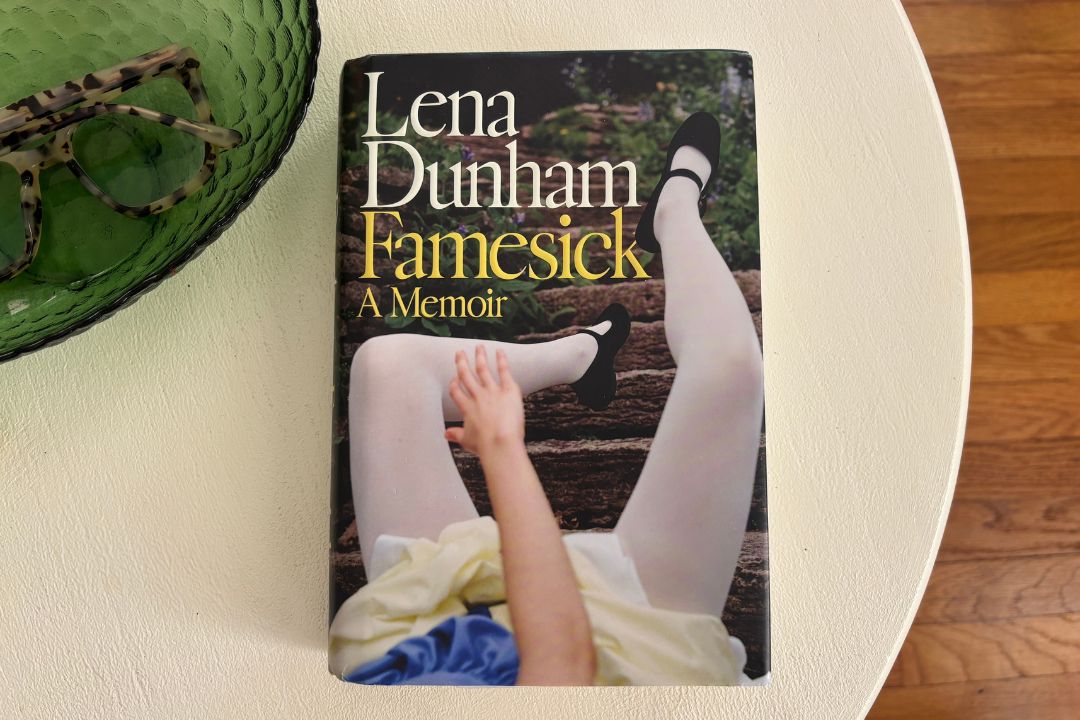
Since watching Girls in its entirety a few times and favorite episodes (“Panic in Central Park,” obviously) at least a dozen, I’ve marveled at Lena’s pen. The way she created something ahead of its time yet reflective of it, immortalizing millennial optimism and twee at her young age, made me desperate to learn how she did it. But in Famesick, she tells a story much more harrowing than a girl making it in Hollywood and becoming one of the lucky few to live out her dreams. It made me rethink how to go about mine.
What is Famesick about?

In this rowdy, frank reflection on illness, fame, sex, and everything in between, the remarkable mind behind the hit series Girls and the bestselling author of Not That Kind of Girl asks whether fulfilling her creative ambitions has been worth the pain.
Along with detailing her filmmaking career, from Tiny Furniture to post-Girls, Lena writes about her interiority during this formative decade, covering strained friend and family dynamics, relationships, breakups, and addiction. Woven throughout is her connection between her body and fame.
In her typical fashion, Lena writes with humorous candor and no fear of oversharing. It’s pure confessional storytelling, reminiscent of a Taylor Swift song (but more perverse). While it reflects a broader cultural reckoning of women’s health being largely neglected, along with many other relevant themes, the story focuses on her personal experience as a chronically ill celebrity. While most aren’t famous, many can relate to struggling with worthlessness, an aching desire to prove yourself, or your pain being minimized (if not all of the above).
5 lessons I took away from Famesick
Narrowing down my takeaways from this book was as challenging as watching Marnie sing “You can be my white Kate Moss tonight.” There are so many lessons to glean from Famesick (most of them illustrating what not to do), but these five have stayed with me since reading the final words.
If you want to make something, do it
Starting out with the simplest, one of my favorite parts of Lena’s memoir is getting a glimpse into her creative spirit and mindset as a young artist. While it’s very important to note that she had all the resources, including supportive parents with connections and peers who are now some of the biggest names in Hollywood (Greta Gerwig, the Safdie brothers), she made things come to life herself. She sat down and wrote the scripts, casting her friends and family in her films. She used what she had and didn’t think to make excuses.
It’s so easy and understandable to tell yourself it’s impossible. You can’t just become a filmmaker. Except you can. Reading about everything Lena did leading up to the making of Girls is proof. That doesn’t mean you’ll be half as lucky and successful as Lena, but (literally) nothing is stopping you from trying.
You don’t have to pretend like you don’t want success
This lesson doesn’t come from a major plot point, but it stuck out to me. If you start paying attention to how many successful women—artists, founders, content creators—talk about how they rose to the top of their field, you’ll notice a pattern. It happened to them, not because of their work and dedication. Dunham conveys her version of this when describing how she fabricated a story about writing the official pitch for Girls, to be given to HBO, on a cocktail napkin.
“The napkin story would become more evidence of the accident of my success, the radical unfairness of a world where things are handed to the undeserving. That may be true, but in that moment, I had never worked harder.” Lena is extraordinarily ambitious; she was born to be a writer, and she wanted her own show more than anything. It’s not her fault she downplayed it; women are taught to act coy and sheepish to be more palatable.
Since reluctantly allowing them into the workforce post-World War II, the patriarchy has been very calculated in how it lets women talk about their professional desires; if you’re too forthcoming about how much you want, you threaten the traditional image of a virtuous woman who is a wife and mother above all else. But if women decide together not to play by these unfair, imaginary rules, they’ll get to make their own. They’ll be free to unabashedly own their dreams without feeling the need to make up stories about napkins.
Your true friends don’t want anything from you
One of the main throughlines in Famesick is the complicated relationship she forms with Jenni Konner, a writer and showrunner on Girls. From their first phone call, Dunham recounts being totally enamored with her. She idolized Jenni, calling her a “best friend, mother, and mentor rolled into one sitting in the director’s chair beside me.” But as the series and their creative partnership evolved, it became clear that the friendship had strings attached. “She especially loved me when I was on my game.”
When Lena was doing well (i.e., hiding her pain effectively), Jenni rewarded her with closeness, heartfelt text replies, and sleepovers. But she didn’t hesitate to take it away. She treated Lena’s ailments like an inconvenience.
“You don’t need to convince others you’re worthy of being heard. Your body knows; you know.”
This is the antithesis of how a friend should treat you: They offer support when you need it rather than pulling away, and while their love has boundaries, it’s not conditional. They want things for you, not from you.
Your body is talking to you, and you know better than anyone what it’s saying
The “sick” part in Famesick mainly references Lena’s chronic illness, which intensifies as her fame grows. She knows something isn’t right early on but is pushed—by herself and others—to soldier on. In the name of not wanting to disappoint people and “lose” the opportunity she had to do what she’s passionate about, she doesn’t let herself rest. She acts in a scene right after breaking her wrist, hiding it under a table and putting it in a sling between takes.
People-pleasing is a slow and excruciating form of self-destruction. Physical pain and emotional distress are a legitimate signal that something is wrong, and you have every right to heed it. Other people shouldn’t make you question what you know you’re feeling, but sadly, that’s common. You don’t need to convince others you’re worthy of being heard. Your body knows; you know.
You don’t “have” to do anything
Getting a show on HBO at 25 was everything Lena had ever dreamed of—and also a terrible burden. She describes it this way: because they took a risk on her, relied on her, and gave her the freedom to create whatever she wanted, she owed them her life. “Somehow the idea of drawing a boundary seemed like bad karma,” she wrote, referring to helping others who pitched her their artistic endeavors.
Even if you’re afraid that if you don’t give an enthusiastic “yes” to everything, you’ll never get another chance, you always have a choice. You don’t have to stay in a job, relationship, apartment, or whatever just because it’s “right” if it makes you dread waking up. You can let go.
Lena eventually does—of her “friendship” with Jenni, Girls, and the boxes she created and forced herself into. In one of the last chapters of the book, she talks about her first time using the dating apps to go on a date and hook up with a stranger. She’d been out of rehab for two years, and, funnily enough, it was something of an awakening.
“I finally understood, in some exquisite way, the cost of all these years spent dividing myself in two,” she wrote. “It hurt too much, to cleave myself from myself. I just wanted to be in my body. And there I was.”

Bryce Jones, Contributing Writer
Bryce is an LA-based journalist and freelance writer. She formerly worked as an editor at Better Homes & Gardens, covering topics ranging from lifestyle and food to entertainment and mental health. Her words have also appeared in Polyester, Cosmopolitan, Apartment Therapy, and more.
