

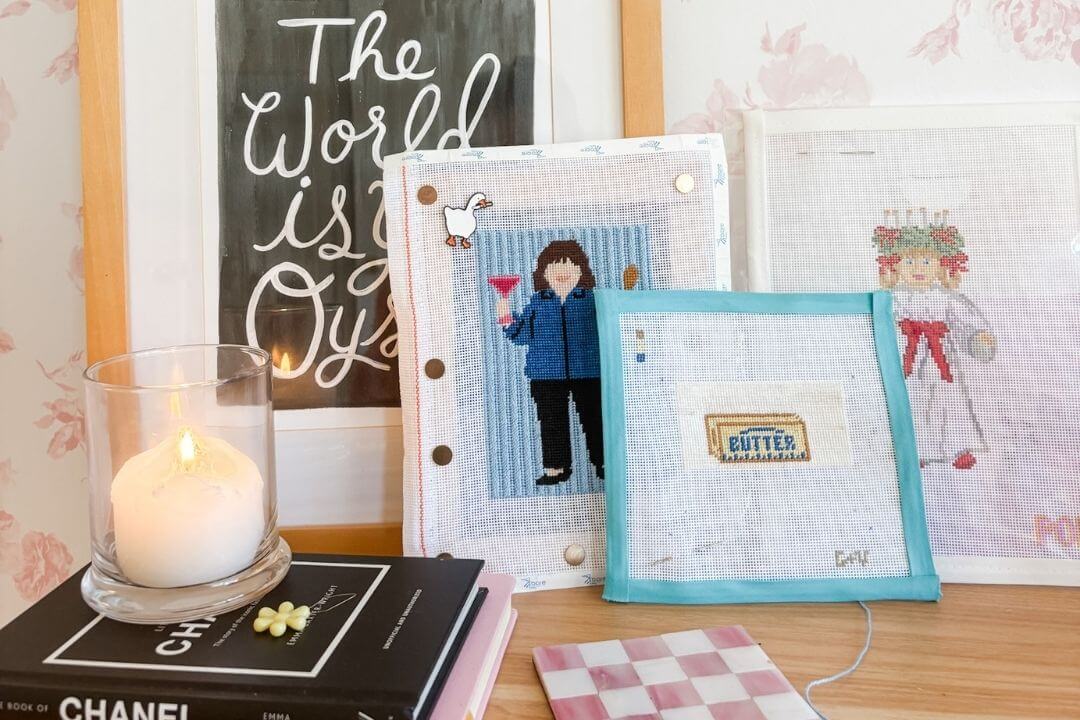
Analog hobbies are having a moment, and I’m honestly living for it. It’s so easy to scroll forever on your phone, and after too many wasted hours on social media, I made it my mission this year to dedicate more time to hobbies that don’t involve a screen. Funnily enough, one hobby has been blowing up on my TikTok scrolls, and on a whim, I decided to give it a try. Fast forward six months, and it’s official: I’ve fallen head over heels for needlepoint.
If you stumble onto needlepoint TikTok, you’ll find a wholesome community of stitchers sharing their projects, asking questions, and cheering each other on. This hobby has been around for a long time, but the millennial and Gen Z community of stitchers is growing—thanks to needlepoint brands like Penny Linn, Morgan Julia Designs, What’s The Stitch, and Friend of Mine modernizing the craft. It’s truly become an iconic way to spend your leisure time. This hobby is both meditative and creative, and it comes with a built-in community of stitchers eager to connect online or in person.
But how do you get started? Diving into a new hobby (especially one that comes with a start-up cost) can be overwhelming, which is why I’ve laid out this complete beginner’s guide to needlepoint. Ahead, you’ll find everything you need to know about what needlepoint is, what you need (and don’t need) for your first project, and tips for getting started from a fellow newbie. Let’s dive in!
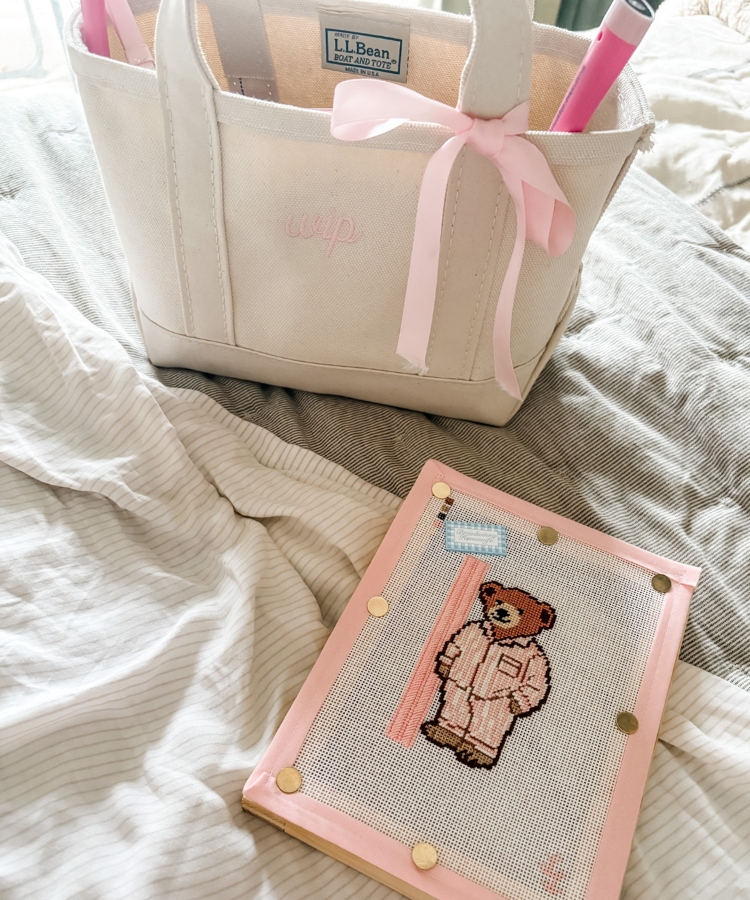
What is needlepoint?
Needlepoint is a type of hand embroidery that involves using a needle and thread to recreate a set design, which is printed or hand-painted onto mesh canvas. It’s essentially paint-by-number, just with stitching instead. Not to be confused with cross stitch (which uses just one type of X-shaped stitch on fabric), needlepoint uses a variety of stitches on canvas.
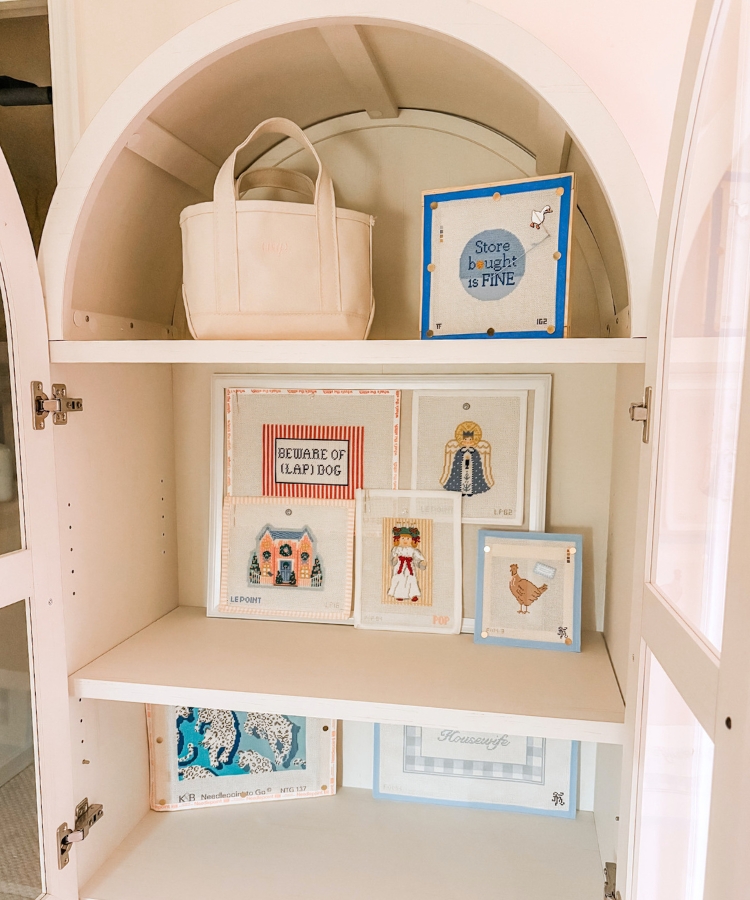
This type of embroidery has been around for a very long time (it can be traced back to ancient Egypt!), and now, you can find all sorts of fun and whimsical designs to stitch. These canvases can then be finished into needlepoint pillows, ornaments, bag charms, fridge magnets, and more. Needlepoint is a calming, meditative hobby that is perfect for winding down after the workday or working into a cozy morning routine. You can even turn it into a social activity—stitch clubs are popping up everywhere!
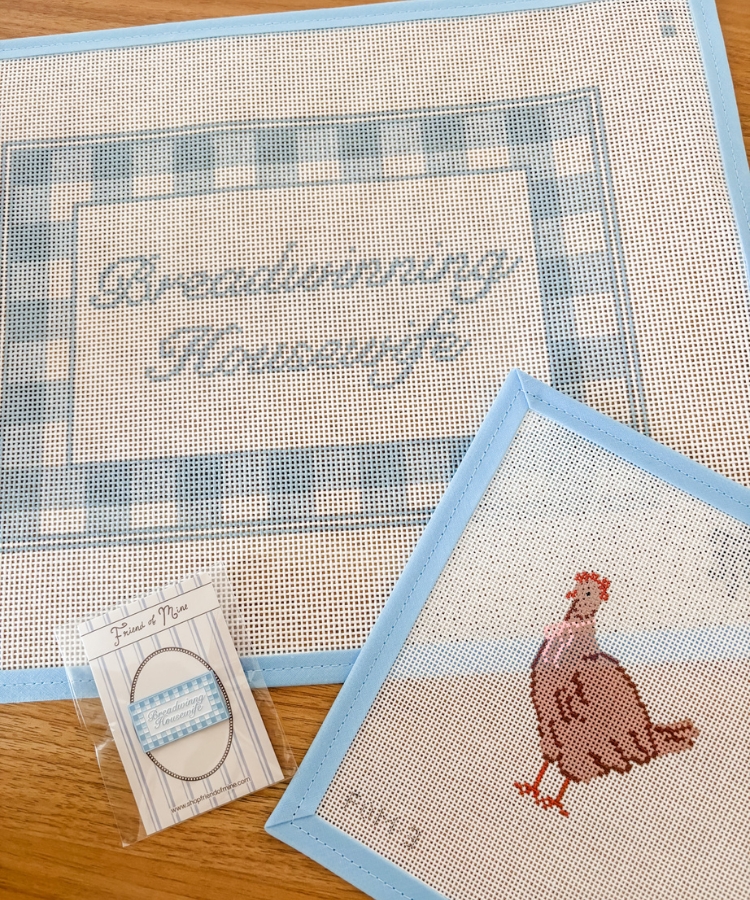
The needlepoint supplies you actually need (and what to skip)
As a beginner needlepointer, I truly had no idea what I was doing as I started to shop for supplies. The good news is that it’s pretty straightforward, and you can find tons of beginner kits that come with everything included! Here are the very basics you’ll need for your first needlepoint project:
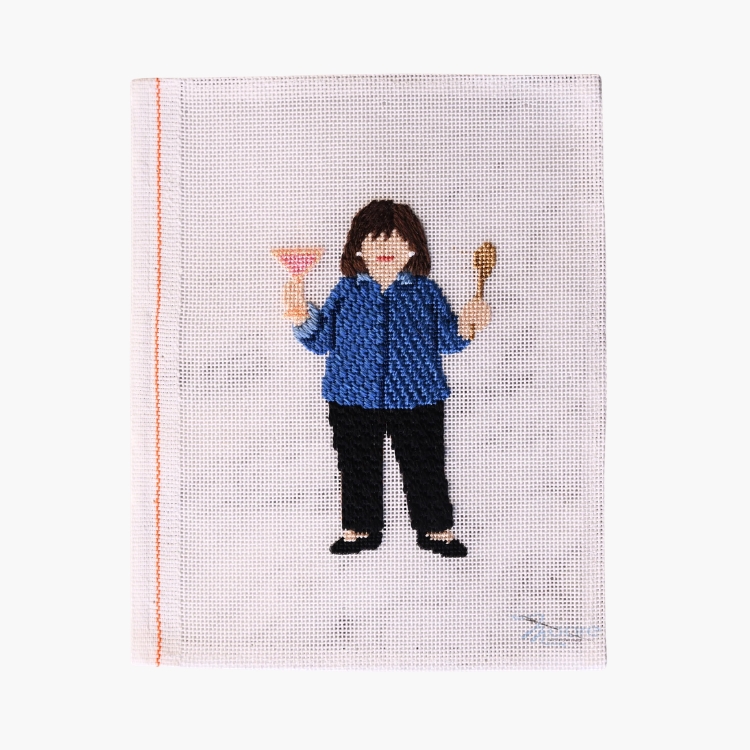
A canvas
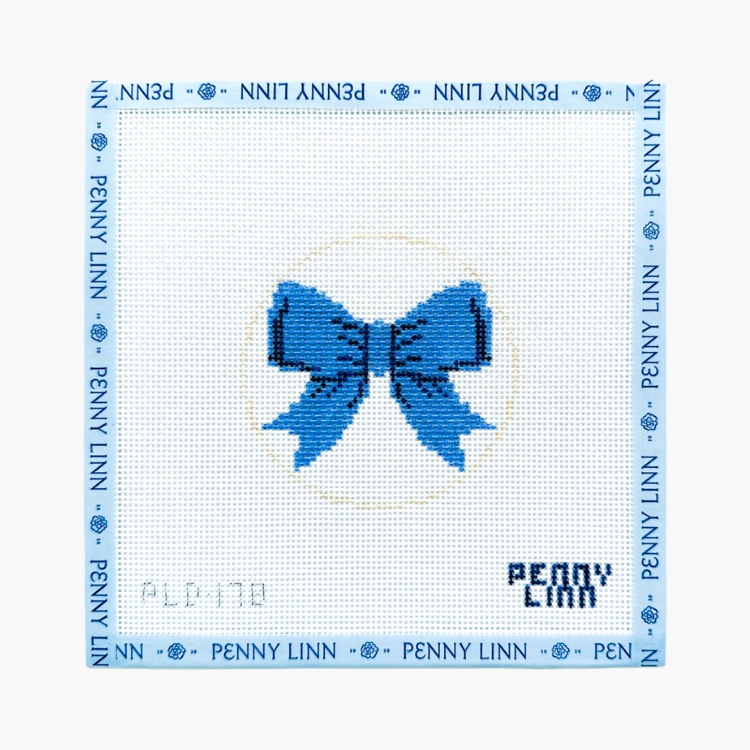
This is what you’ll be stitching! To start, look for a simple design you love with just a few colors (two or three is ideal). Needlepoint canvases come in two sizes: 13-mesh and 18-mesh. The mesh count refers to the number of squares per inch, so the squares on a 13-mesh canvas are slightly larger than those on an 18-mesh one. You could start with either size—my very first project was 18-mesh, and it was great, but now I prefer stitching 13-mesh! It’s really personal preference, so don’t stress too much.
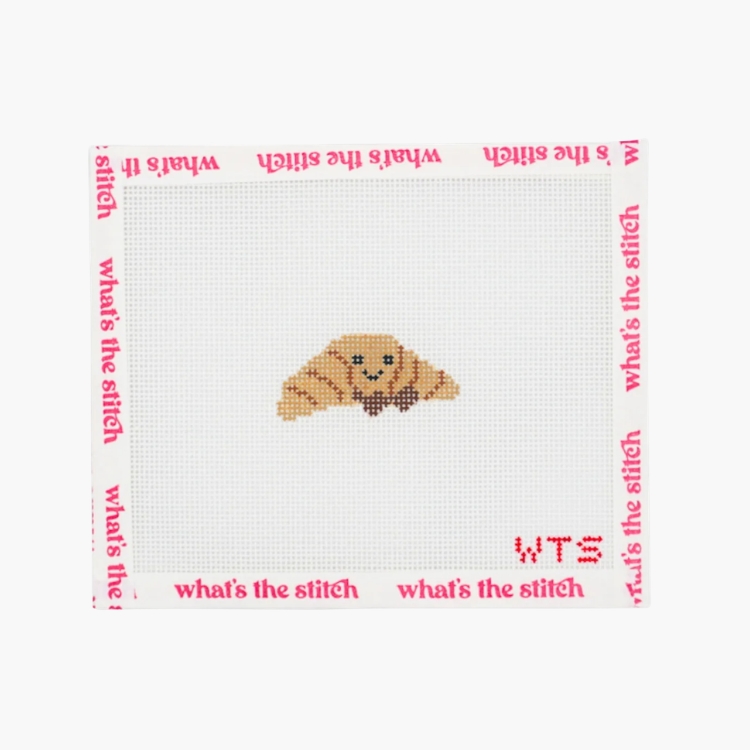
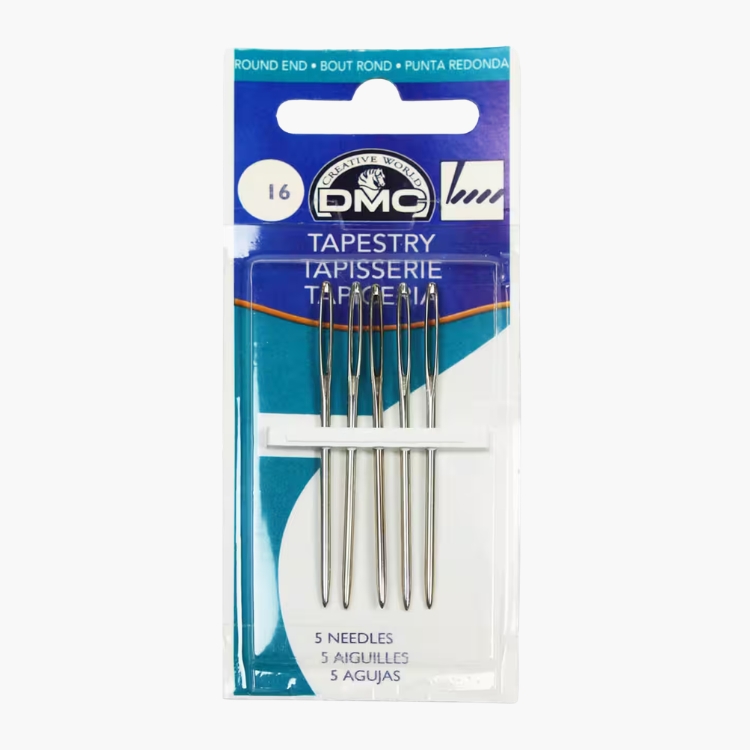
A needle
Almost all the canvases I’ve purchased came with a needle, but if yours doesn’t, you can find needlepoint needles at any craft store and online. Just look for needles with blunt tips (often called tapestry needles).
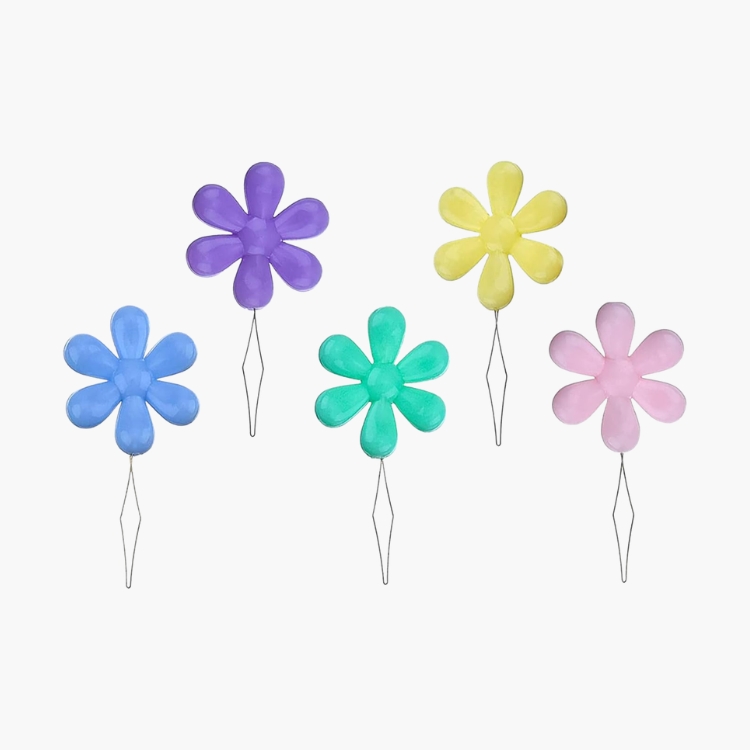
A needle threader
Some may say this isn’t absolutely necessary, but I personally think I would tear my hair out without one. You’ll be threading needles often, and a needle threader makes it quick and easy.
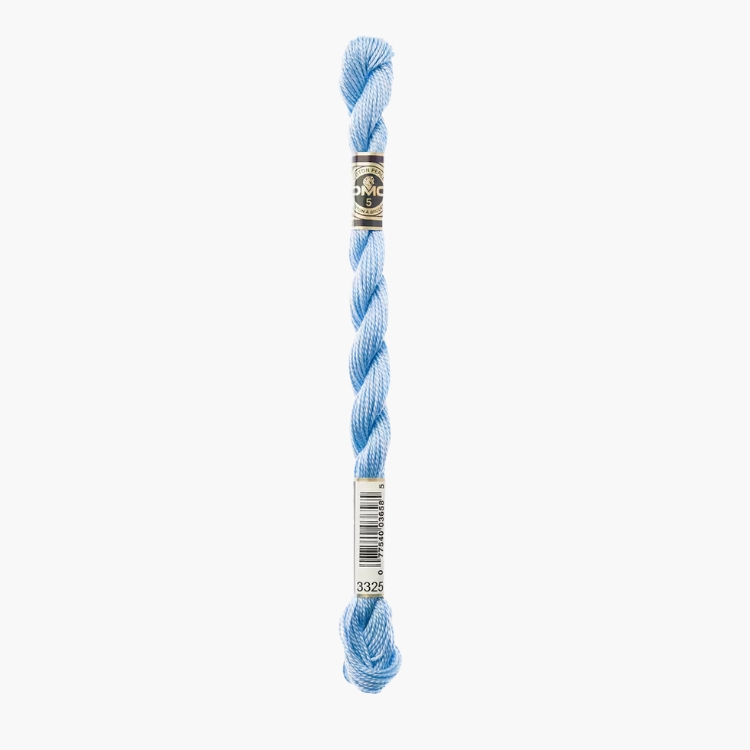
Thread
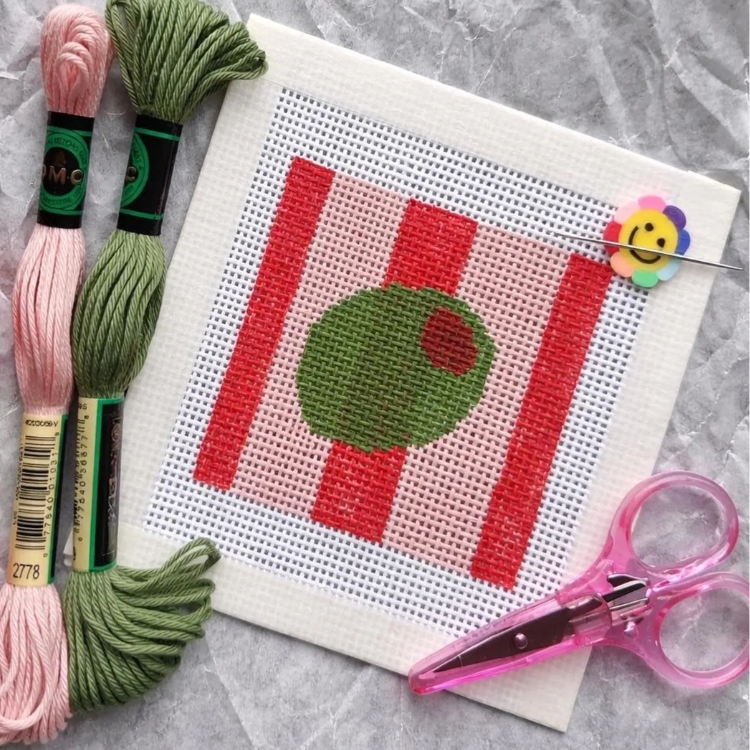
You’ll be needing fibers to stitch with! Needlepoint thread comes in different materials, and my recommendation for beginners is to use DMC soft matte cotton or DMC pearl. You can easily find DMC threads at most craft stores, and they’re often the most cost-effective option.
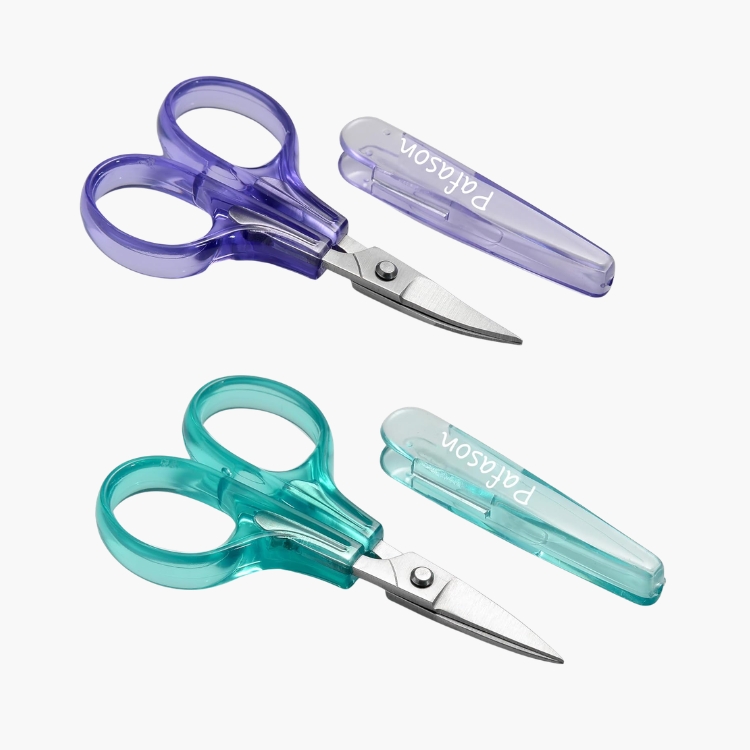
Craft scissors
You’ll need to cut your thread, so a small pair of craft scissors is essential!
A beginner needlepoint kit
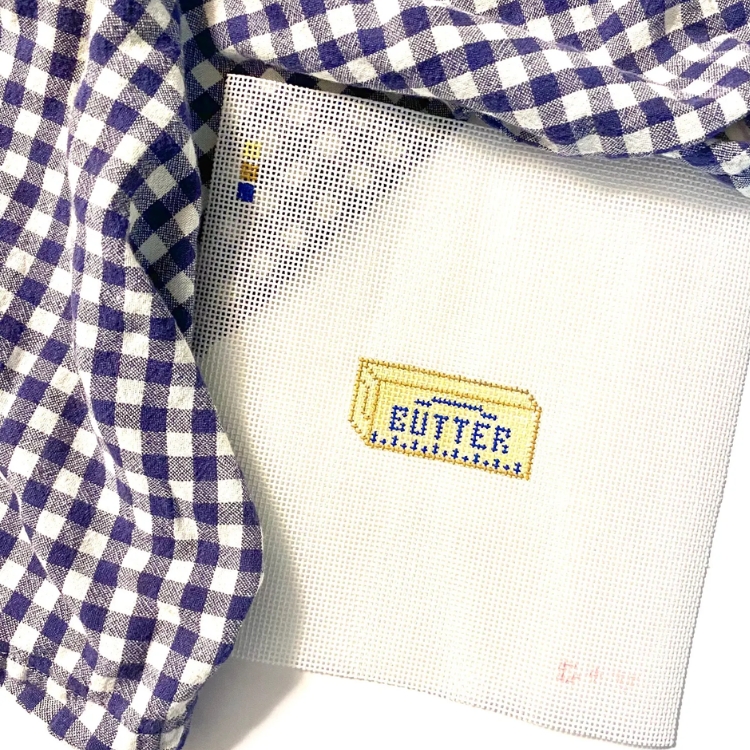
In the needlepoint world, gathering all the threads and supplies needed to complete your project is called “kitting.” If purchasing all these items à la carte seems overwhelming, grab a beginner kit instead. These kits include everything you need to start and finish a project—a huge relief! My first project was a beginner kit from Geraldine and Virginia on Etsy. I chose a small butter canvas that included all the threads, a needle, small scissors, and even a printout with a beginner-friendly stitch. It was perfect!
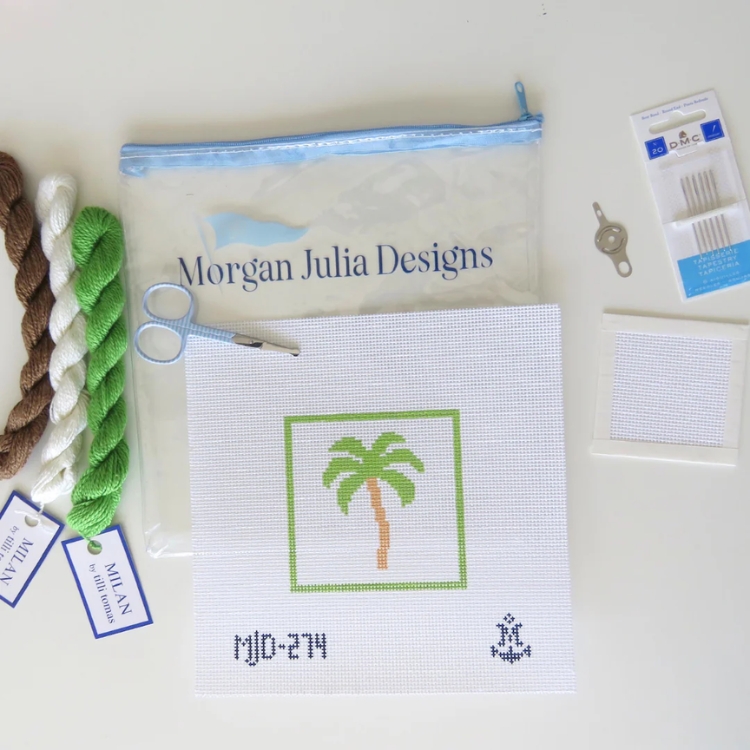
As you dive into needlepoint, you’ll discover that there are tons of accessories available to purchase. But beyond the essentials listed above, you don’t really need anything else, at least to start with. Things like stretcher bars (wooden frames for your canvases), needle minders (a little magnet to keep on your canvas to store your needle), and project bags can wait.
How much does needlepoint cost?
Fair warning: Needlepoint does cost a bit more than your average crafty hobby. Most canvases are hand-painted, and even the threads are sometimes created by hand, which drives up the cost. In general, most beginner kits range from $30 to $80 (my first project kit cost $40). More advanced canvases can cost anywhere from $50 to $150, and once you add in the cost of the threads for each project, as well as finishing (turning your canvases into ornaments, pillows, etc.), it can add up very quickly! But there are ways to make needlepoint more cost-effective, and I encourage you not to let the cost deter you from trying.
To keep your costs minimal, shop inexpensive DMC threads, paint your own canvases, or purchase digital needlepoint designs (which usually cost between $5 and $10 and include instructions on how to transfer the design to your canvas). Needlepoint is also a slow hobby, meaning one project may take you weeks to finish. Between choosing your canvas, kitting it, stitching it, and finishing it, you will really get a lot of bang for your buck!
Contrary to the needlepoint haul videos you may see on social media, you don’t need to drop a bunch of money on multiple projects to work on at once. Start with one project and work on it until it’s finished. There’s no need to spend hundreds of dollars all at once—or even at all. Just like with any hobby, you do have to buy in for your basic supplies, and in my experience, needlepoint is well worth the investment.
Needlepoint tips for beginners
I picked up needlepoint because I was curious about why it was so popular, and I wanted to try a hobby to get me off my phone. I’m truthfully blown away by how much I fell in love with it and how much peace it brings me in my day-to-day routines. Here are a few tips and tricks I’ve learned as a beginner myself:
- Start with the continental stitch. It’s the most basic stitch and will serve you well. Don’t worry about decorative stitches until you’ve mastered continental!
- Stitch your canvas in sections or by color—it’s completely up to you.
- It’s OK if you mess up a stitch (as a beginner, mistakes are inevitable!). Simply undo the stitch and begin again. Aim to fix the mistake immediately, as soon as you catch it. It’s much harder to go back and fix if you keep going (I learned that the hard way!).
- Don’t let perfectionism take away the joy of stitching. My first project is perfectly imperfect, which is why I love it so much. I stitched it with my own two hands, after all!
- Take advantage of the needlepoint community. Share your projects on social media—you can start with a WIP (which stands for work in progress) Wednesday! Look for an LNS (local needlepoint store) in your area and see if they have stitch nights. More and more women are stitching—and doing it together. It’s a great way to meet new people!
- You can finish projects yourself, or send away your completed canvas to pro finishers who will do it for you. In the needlepoint world, a lowercase-f finish means you’ve stitched the entire canvas, and a capital-F Finish means the canvas has been turned into a pillow, an ornament, etc. I’ve been stitching for six months and haven’t capital-F Finished any of my canvases… yet! I plan on self-finishing most of them and sending off more intricate projects to the pros. Many needlepoint stores offer finishing services, and you can find them online as well.
Remember that your first needlepoint project doesn’t have to be perfect. This hobby should be fun and relaxing! It’s truly changed my life for the better, and I’m so grateful it found its way into my daily routine. Happy stitching!

Kristen Garaffo, Contributing Home & Living Writer
Kristen Garaffo is a Washington DC-area-based freelance writer. She specializes in home and lifestyle content and loves helping others live their best lives at home and beyond.
