

“Just swing and let go,” my friend yelled from the rippling Hawaiian waters below as I stood gripping the knotted rope from a tree above. An audience of two waited in anticipation with a phone raised to capture the moment as the countdown began. “Three! Two! One…” they shouted in unison. I couldn’t stop the flood of thoughts that came pouring in: Will I drown? Were my lessons sufficient? Should I just resort to the shallow end of the waterfall and call it a day? If my thoughts were somehow projected above my head for all to see, my friends below would have been very confused. Little did they know that the 22-year-old woman standing on the cliff, getting ready to swing off into the deep, vast pool of water below, had just learned how to properly swim about two months ago.
Before I took lessons, swimming was one of those things that I just didn’t do much when the occasion arose. I would get into the shallow ends of pools or step into oceans, but only if I had the reassurance of a life vest or floaties nearby. Sometimes, I would venture into deeper parts of confined water, but my doggy paddling could only take me so far until I quickly paddled back to the safety ledge of the pool. I didn’t think much of my subtle, unexplored fear until a ripple of events revealed that it stemmed from something much deeper, and that learning how to swim would be the only way to confront it.
Why I decided to learn how to swim
Years prior, on a family beach trip to Florida, I indulged in reading, snacking, and dilly-dallying in the water, and my mom lounged in the shade and listened to music, only venturing ankle-deep into the water. “Why don’t you come try boogie-boarding with me and Tristen?” I asked her as my younger brother and I started to wrap our tethers around our ankles. Boogie-boarding was one of the few activities that my little brother and I felt comfortable doing in open water, considering we had the comfort of a flotation device, and the activity only allowed us to go waist-deep. My mom, after a reluctant back-and-forth exchange, finally exhaled and said, “Aaliyah, I can’t swim.”
“After taking a hard look at the root causes of a fear that has affected generations of my community, I was determined to let that fear end with me.”
Her confession didn’t concern me initially. It stayed filed away in my mind until I became interested in learning to surf, as any California-living girl does. Ironically, I signed up for surf lessons before swim lessons. But about two weeks into the course, I noticed my inexperience was restricting me. As I stayed near the shore with one of the surf instructors and a few other students who also weren’t comfortable going deeper into the water, I felt a twinge of jealousy toward the classmates who didn’t share my concerns. My mom’s confession, coupled with this brewing jealousy, would soon provide me with two out of three reasons why I decided to click the register button for weekly swim classes a year later. The third reason stemmed from what I learned about how our shared fear was actually generational.
Where my fear of swimming stems from
This is a reality for many Black Americans. According to CNN, one in three Black adults say they can’t swim. When you first look at this statistic, you might think that it’s out of disinterest in the activity itself. If Black Americans wanted to learn how to swim, then they just would. When I think of the day my mom defeatedly admitted that she couldn’t swim, I know that it wasn’t due to a lack of desire. It was due to the environment and the generation in which she grew up. Those with melanated skin were confronted with hardship, trauma, and unspeakable horrors when it came to swimming.
To better understand the ubiquitous fear amongst me and my family, I dove into Black history. I learned that the origins were in the Atlantic slave trade, when my ancestors were forced to leave their homeland for the sole purpose of exploitation. During this voyage, thousands of bodies were crammed onto ships for weeks and subjected to famine and disease. Many slaves decided that the horrors awaiting them on the other side of the ocean were worse than death. Often, they decided to starve themselves, conspicuously obtain weapons to end their lives, or jump into the crashing waves below them to avoid their fate.
“When I think of the day my mom defeatedly admitted that she couldn’t swim, I knew that it wasn’t due to a lack of desire. It was due to the environment and generation in which she grew up in…”
When I learned more about this time in history, I erroneously assumed that Black people never had any pleasant experiences with open water. Therefore, it was never in the cards for us to have the same relationship to water as other demographics had. However, what I didn’t learn in my history classes was that there are recollections of Black individuals being excellent swimmers when they had the rare luxury to enjoy the open water. For example, Yarrow Mamout, a freed slave, was known as the best swimmer to grace the Potomac River. The relevance of this information may appear trivial to others, but knowing this was crucial to eradicating the cycle of a long-standing fear.
How this generational trauma impacts me today
As much as we want to believe that Black trauma and fear in America should be cured by now because “it happened so long ago,” it doesn’t erase the reality that history is still influencing behaviors today. Many individuals are still alive who witnessed prejudice, discrimination, and cruelty because of the color of their skin. As someone who has living, breathing great-great-grandparents who were born just shy of the 1920s and ’40s swimming pool boom, I couldn’t deny its relevance to my quest to understand the fear that was passed down to me.
The demand for pools in the ’40s prompted them to be built in poor, immigrant, and working-class white neighborhoods. Those in predominantly Black areas, however, saw a disproportionate lack of swimming pool access (or none at all). Out of fear, influenced by unsensible stereotypes, predominantly white areas started to segregate their municipal pools. So when the Highland Park swimming pool in Pittsburgh officially opened its doors in 1931, Black swimmers were viciously attacked and harassed. “If they made it into the water, they were oftentimes beaten, dunked, and punched in the water,” Dr. Jeff Wiltse, author of Contested Waters: A Social History of Swimming Pools in America, said in a 2008 NPR interview.
“Although I didn’t see any other faces that looked like mine, I felt like I was making a small ripple in the chain that could inspire others like me to exist in this environment.”
This only scratches the surface of the hate and brutality that Black individuals had to face—and the trauma that still affects us today. After taking a hard look at the root causes of a fear that has affected generations of my community, I was determined to let that fear end with me. So, I opened my laptop and signed up for my very first swim lesson at my university.
How swimming lessons helped me confront my trauma
“Now let’s go in a circle and talk about the reasons you all want to take this class,” my swim instructor said, as a group of seven adults circled her. I was relieved that there were more adults than I had expected, and that the swim instructor, who was also a college student, was warm and inviting. Although I didn’t see any other faces that looked like mine, I felt like I was making a small ripple in the chain that could inspire others like me to exist in this environment. The responses varied: “I want to be more comfortable in the water. I want to be able to swim at the beach without anxiety. I want a new form of exercise.” As for me, I wanted to contribute to a new statistic. A statistic that shows a growing number of Black swimmers.
“I didn’t sign up for swim classes to stay in my comfort zone. I came to confront a legacy of trauma.”
I signed up for two swim classes a week for the next two months. In the first few classes, we learned basic swim techniques—the front crawl, butterfly stroke, and breast stroke—as well as breathing techniques. Learning these techniques felt empowering, and I picked up on them quickly despite my initial nerves. Eventually, as the classes progressed, we ventured into the deep end, where we were provided with floaties to help us with our kicks. When I decided to relinquish my floatie and brave the full length of the pool, I felt a mix of excitement and concern—excitement for the new skills I was mastering and concern that I miscalculated my readiness. I was worried that I would struggle and embarrass myself in front of the other adults, but I then reminded myself why I was doing this in the first place: I didn’t sign up for swim classes to stay in my comfort zone. I came to confront a legacy of trauma.
When the instructor gave us the green light to swim the full length of the pool, two other classmates and I pushed off the pool’s wall and began to swim. At the halfway point, for the first time, I kept going instead of turning around. I didn’t feel my typical wave of panic from not having the reassurance of a nearby floatie or the ability to easily plant my feet. Instead, a wave of calmness I had never experienced before settled. My arms and legs sliced and kicked through the water, my head breaching the surface every few strokes to take a deep inhale. Before I knew it, I approached the wall and gripped its ledge for support as I caught my breath and watched the two other students do the same.
Later in Hawaii, when I finally let go of the rope and swung from the cliff into the body of water below me, there was a moment of silence as my head went underneath the water. My body felt weightless, as a galaxy of bubbles surrounded me. When my head broke the surface, my body automatically did what it’d been taught two months prior: swim. I felt empowered. I was doing the very thing that invoked fear in many of those around me. It felt like I was reclaiming something that was stripped away. It felt liberating, and I finally felt free.

Aaliyah Alexander, Contributing Writer
Aaliyah is a writer, content creator, and blogger based in Brandon, Mississippi. She attended San Diego State University where she received a degree in journalism and worked as an editor for the award-winning student newspaper, The Daily Aztec. Aaliyah covers a range of topics including slow living, her favorite vegan food spots, minimalism, self-growth, and entertainment.
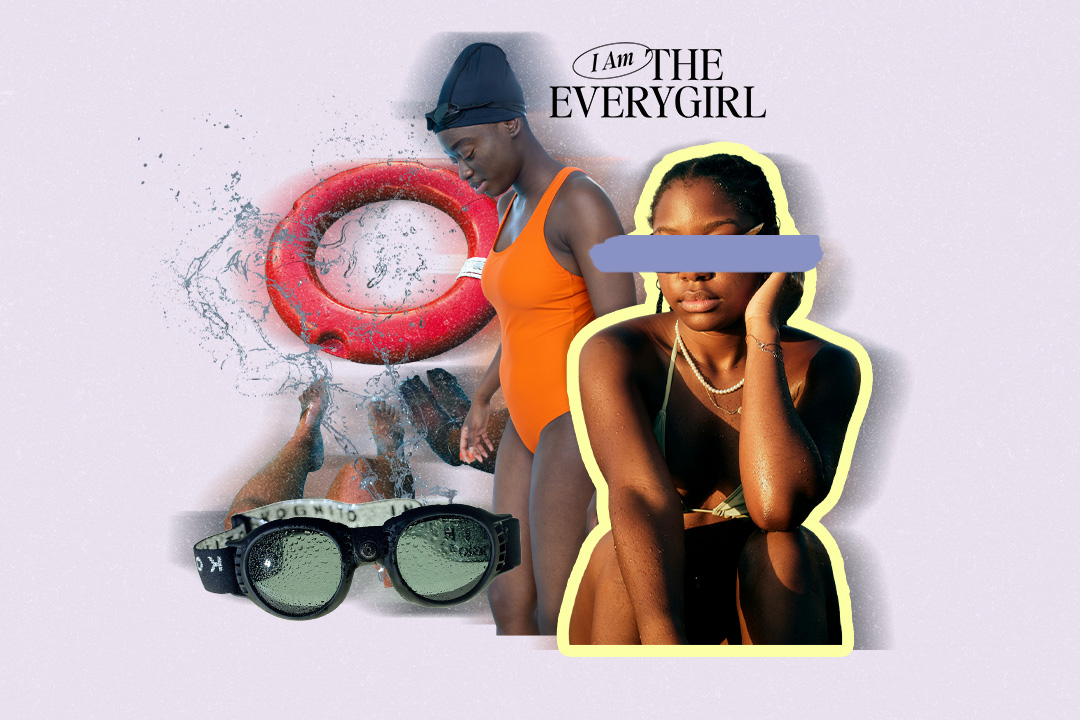
Feature graphic images credited to: Larbigno | Pexels, StockRojoVerdeyAzul | Adobe Stock, Towani Mutale | Dupe, Adrian Funk | Adobe Stock
