

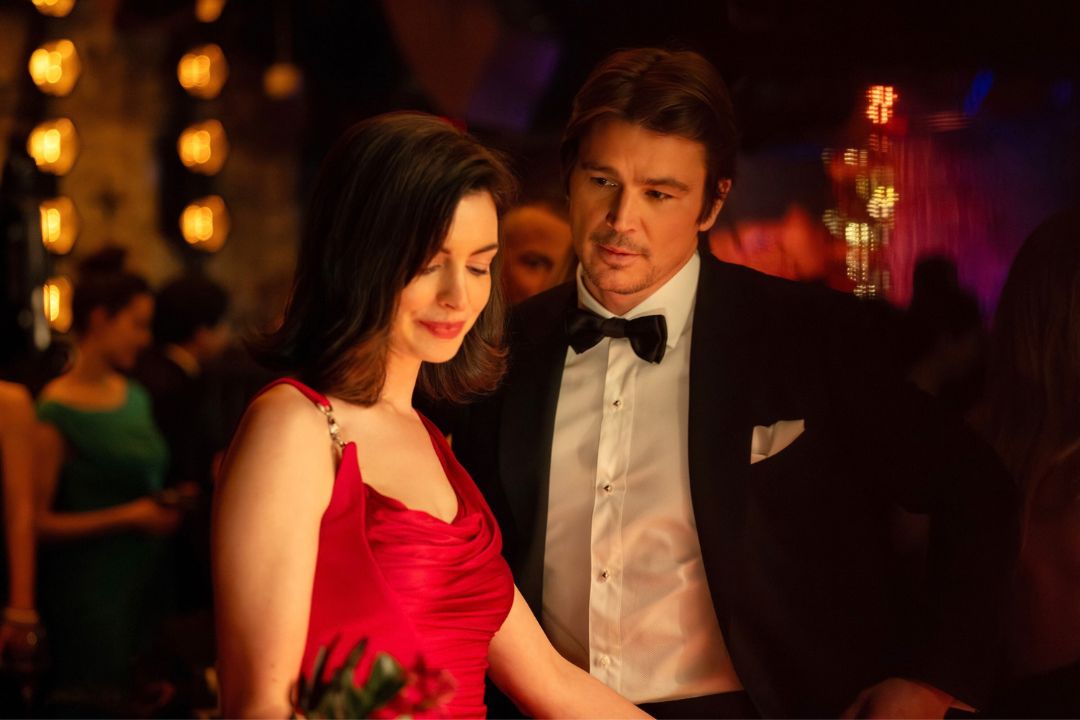
These days, it seems like Colleen Hoover is at the epicenter of media. Whether it’s the literary world or Hollywood, her books and adaptations are coming out in rapid succession, each one with an even more A-list cast to one-up the last. But no Colleen Hoover movie has had quite as much anticipation as the adaptation of her bestselling thriller, Verity.
Now, before we dive into this review, I feel like in the name of journalism, I have to let you know that I am a little biased when it comes to Colleen Hoover. Whereas millions of readers have swooned over what she writes, I have yet to find a book that I…connect to. That said, of all the books of hers I’ve picked up, I can confidently say Verity is her best work by far. And after seeing Regretting You and It Ends With Us in theaters, I was honestly pleasantly surprised by how her books were adapted for the screen. If anything, her plots felt better suited for a 90-minute viewing experience than a multi-day reading one. So, I went into Verity excited to see how it would land on the big screen. Unfortunately, what I hoped would be an entertaining psychological thriller felt like a middle school production of Gone Girl.
What is Verity about?
Verity follows writer Lowen Ashleigh after she receives the opportunity of a lifetime: finishing the books of bestselling author Verity Crawford, who can no longer write after a car accident. The money is too good to turn down, and before she knows it, Lowen is living in the Crawfords’ home, digging through Verity’s notes to finish her bestselling series. But when she stumbles upon an autobiographical manuscript, she discovers just how sinister Verity’s mind may really be. As Lowen grows closer to Verity’s husband and son, she grows determined to uncover the truth behind the family’s tragedies.
My review of Verity
When going into this movie, I figured that even if the storyline isn’t for me, it’ll be fun to watch Anne Hathaway and Dakota Johnson on screen. And honestly, it was fun to watch Anne Hathaway and Dakota Johnson! But I didn’t feel like I was watching their characters at all. Anne Hathaway’s Verity came across as so cartoonish and over-the-top that it almost felt like an SNL parody of a villain. Which, sure, is the point to a certain extent, but it was so heavy-handed that Dakota Johnson’s Lowen falling for her ruse made her look like the worst, most naive amateur detective in the world.
What kind of thriller writer doesn’t even stop for a second to consider that the most obvious explanation may not be the correct one? Her “investigating” consisted of Googling “Verity Crawford” once and running with it. She becomes incredibly attached to a family after having approximately three conversations with the father and asking the son to play twice, only to be turned down twice. Her affection for them felt out of nowhere and, in turn, made her fascination with the family feel completely unearned.
It’s been a while since I’ve read the book, but I do remember being genuinely shocked by the plot twist. In the film, Verity’s lies were clear from the start, and it’s clear what they want you to believe in the manuscript-versus-letter debate. In fact, the whole “twist” didn’t really change anything.
“Where Gone Girl shows the dangers of the male fantasy and how women are driven to the brink while forced to erase themselves in the name of male validation, Verity never actually says anything.”
Spoiler alert: Lowen had no qualms about being with Jeremy after he killed Verity if she truly was responsible for Harper’s death. And it’s clear that he still 100 percent believes Verity is the reason for her death. So, even if the letter is true, it doesn’t change the information Jeremy was working with. It also doesn’t really change anything about Lowen and Jeremy’s relationship. When faced with the same information, they were both perfectly fine with murder as the solution.
With Gone Girl‘s enduring pop culture relevance, it felt like the movie’s goal was to create a “zillennial” version of the unreliable-narrator story, complete with plenty of Alex Cooper cameos and Hot Ones clips. But, honestly, the attempt is an affront to Amy Dunne. Verity voicing her manuscript adopts the soft, even-toned delivery of the Cool Girl monologue, but instead of appealing to the same fans, it just reminded me how incomparable the two are.
Where Gone Girl shows the dangers of the male fantasy and how women are driven to the brink while forced to erase themselves in the name of male validation, Verity never actually says anything. It’s basically one hour and 54 minutes of film just to hammer home the point that there can be multiple versions of the truth and that it’s impossible to know which one is objective. Which…we know? It doesn’t add any new, interesting commentary or make a grand statement about truth beyond saying that different versions exist.
So, should you see Verity?
If you’re in the mood to zone out in an AMC theater for two hours, why not! But Colleen Hoover fan or not, I wouldn’t go in expecting a psychological thriller that will have you glued to your seat. At the end of the day, consuming an actual popcorn thriller with actual popcorn isn’t a bad way to spend an evening, but I don’t see this entering anyone’s Letterboxd Top Four anytime soon.

Lauren Blue, Associate Editor & Book Club Co-Host
As an Associate Editor for The Everygirl, Lauren ideates and writes content for every facet of our readers’ lives, from must-read books and behind-the-scenes interviews to beauty products she can’t live without. When she isn’t sitting in an AMC watching the latest buzzy release, she can be found scouring Goodreads for the perfect pick for The Everygirl Book Club. There, she co-hosts discussions with members, debating plotlines, fancasting characters, and, of course, tossing in her own recommendations.
