

The first space I ever added pattern to was my laundry room. It wasn’t even really a room—more like a closet with my washer and dryer in it—but the joy that it brought me was immediate. I added a simple green and white vine pattern to the back wall, and every time I opened the doors to do laundry, it felt like a surprise. The magic of a patterned wall! That one home project taught me that the way our spaces look and feel matters. Pattern turned a boring chore into something special.
I completed that project five years ago, and little did I know that patterns and wallpaper would continue to trend into 2026 in a big way. But the days of the statement wall are over—we’re now talking about statement rooms. Today’s design trends revolve around spaces that feel deeply personalized, filled to the brim with color, texture, and, of course, pattern.
Pattern drenching is this year’s most exciting interior trend, and ahead, you’ll learn all about how to pull it off in your own home. Not into minimalism? Then this 2026 design trend will be music to your ears! Let’s dive in.

What is pattern drenching?
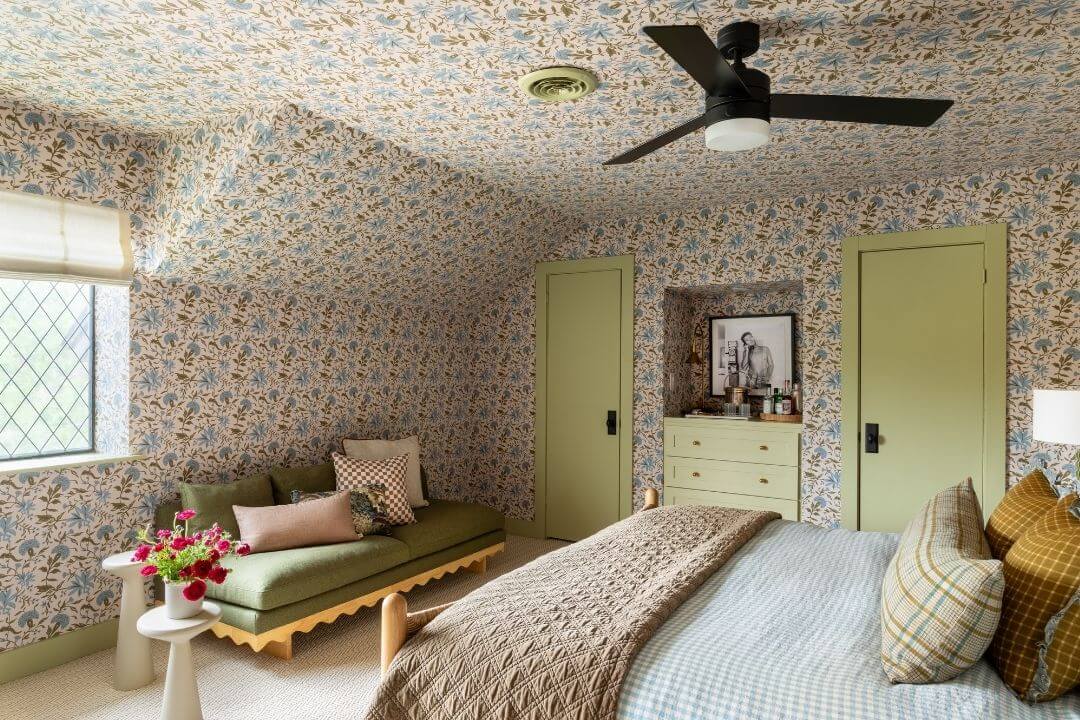
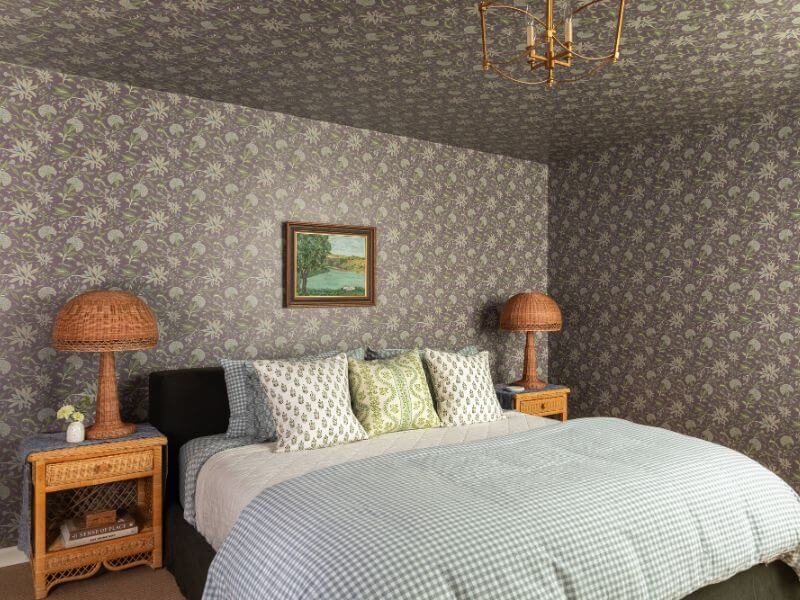
“Pattern drenching is a technique in interior design that uses one singular pattern all over a room to create an all-encompassing look,” explained Elizabeth Rees, founder of the wallpaper brand Chasing Paper. Very similar to color drenching, this technique takes it up a notch. A pattern-drenched room is covered completely in pattern—and I mean completely. “One of the most common ways we’re seeing people implement pattern drenching is wallpapering an entire room, including the ceiling or fifth wall,” Rees said.
Entering a pattern-drenched room should feel like walking into a jewelry box, or a cocoon of pattern and color. To achieve the look, patterned wallpaper is obviously key, but patterned furniture and decor can also play a part.
How to pattern drench your own home
Pattern drenching is a bold look, and getting it right takes a discerning eye. Here are all the factors to consider, according to the pros.

Which room should I pattern drench?
While there are no firm rules about where you should and shouldn’t pattern drench, there are a few factors that Rees considers. “Rooms that don’t have a lot of natural light are a great place to bring in pattern drenching to add life to the space,” she said. A powder room is perhaps the best example and a great place to start. Especially if you’re feeling a bit nervous about pattern drenching, a powder room is relatively small and low-commitment, but can still pack plenty of punch.
Pattern drenching also works well in rooms with lots of open wall space. “I love using patterns everywhere, but I typically avoid adding a lot of them in rooms that tend to have a bunch of visual breaks or disruptions, like the kitchen,” Rees said. Living rooms, bedrooms, and home offices typically have lots of uninterrupted wall space to fill with patterns. As you make the rounds through your home, notice what spaces could use more excitement, color, and life.
How do I pick the right pattern for my space?
Once you’ve decided which room you’d like to pattern drench, the pros suggest you look around your space. “It’s important to consider existing colors and patterns in a room before incorporating something new to ensure cohesiveness and overall flow,” Rees said.
Alberto Villalobos, the principal designer at A. Villalobos Design, shared a perfect example of working with the patterns that already exist in a space. “A client had an existing subway tile on the powder room wall that provided somewhat of a cool geometric pattern,” he shared. “By introducing a bold, vibrant wallpaper, we brought the entire look of the room to life by introducing an exciting contrast which complemented, or married, the geometric and organic patterns.”
For interior designer Kati Curtis of Kati Curtis Design, scale is everything when it comes to pattern drenching. She advised against picking a print that’s too small. “I always recommend starting larger than feels safe, especially in smaller rooms,” Curtis said. “A larger pattern reads as confident and architectural, while small, busy patterns can feel fussy when wrapped across the walls, ceilings, and upholstery.”

What patterns are popular right now?
Even though I always think it’s smart to decorate with what you love instead of chasing trends, there are a few different types of patterns you’ll be seeing a lot of this year. According to Rees, block print florals are poised to be 2026’s pattern of the year.
“Block prints have been growing in popularity, and we anticipate that they will continue to evolve,” she said. “In 2026, we are also definitely going to see design move towards more tactile, nature-led aesthetics.”
Even though pattern drenching is bold, nature-inspired prints can have a calming effect. Floral block prints, especially, ooze charm, warmth, and coziness—perfect if you love the cottagecore look. We’ve also been seeing a revival of traditional patterns like chintz, an oversized floral pattern, and toile, which is characterized by monochromatic, pastoral scenes set against a white backdrop. Blame it on the rise of “grandma hobbies” and the grandmillennial aesthetic, but grandma-chic is very in right now!
Stripes are another popular pattern that reads more timeless than trendy and would make a fantastic pattern-drenched space. A room filled with stripes in various sizes and colors is a maximalist dream, and the possibilities are endless!

Can I add more than one pattern to a pattern-drenched room?
The short answer? Absolutely. Pattern layering can add even more depth to a pattern-drenched room—you just want to be sure the patterns you pick strike the right balance. “The scale and color of prints are the most important thing to consider when mixing different patterns,” Rees shared. “I always recommend sticking with a cohesive color palette, but choosing patterns that have a very obvious difference in scale can help you avoid a clashing or dizzying effect.”
The key to balancing multiple patterns is to let one pattern be the star, Curtis advised. “Every pattern-drenched room needs a hero,” she said. “Once that’s established, supporting patterns should play a quieter role—a smaller scale, softer contrast, or simpler geometry. Think hierarchy, not competition.”
Curtis also recommends incorporating a grounding element—like painted trim or a solid-color floor and ceiling—to provide a visual break. “This gives the eye a framework and keeps the room feeling designed rather than accidental,” she said. “Think of this element as the denim jeans with the floral top and colorful shoes!”
What patterns work well together?
Not sure where to start? Rees has a favorite pattern combo. “Stripes with florals are my go-to pattern combo—they never fail me!” she said. “I love using a larger stripe print with a smaller block floral to add depth to the space without too much busyness.”
Curtis loves all-over pattern, just scaled differently throughout. “If there’s variation, it’s through scale rather than motif—oversized on the walls, tighter on seating, quieter on secondary pieces and accessories. Still immersive, but layered,” she said.
What if I’m nervous to try pattern drenching?
Although pattern drenching is bold, it doesn’t have to be scary. “There are no particular rules, so have fun with it!” Villalobos said. “Test out what you think might look best. Sometimes patterns look best stacked, side-by-side, or spread out just a bit so they aren’t competing with each other.”
Stay tuned in to your gut and pick patterns that make you feel something—whether it’s excitement, joy, calm, or just a sense that the pattern feels like home. Design should be fun, and pattern drenching should make your space feel like it’s 100% yours!

Kristen Garaffo, Contributing Home & Living Writer
Kristen Garaffo is a Washington DC-area-based freelance writer. She specializes in home and lifestyle content and loves helping others live their best lives at home and beyond.
