

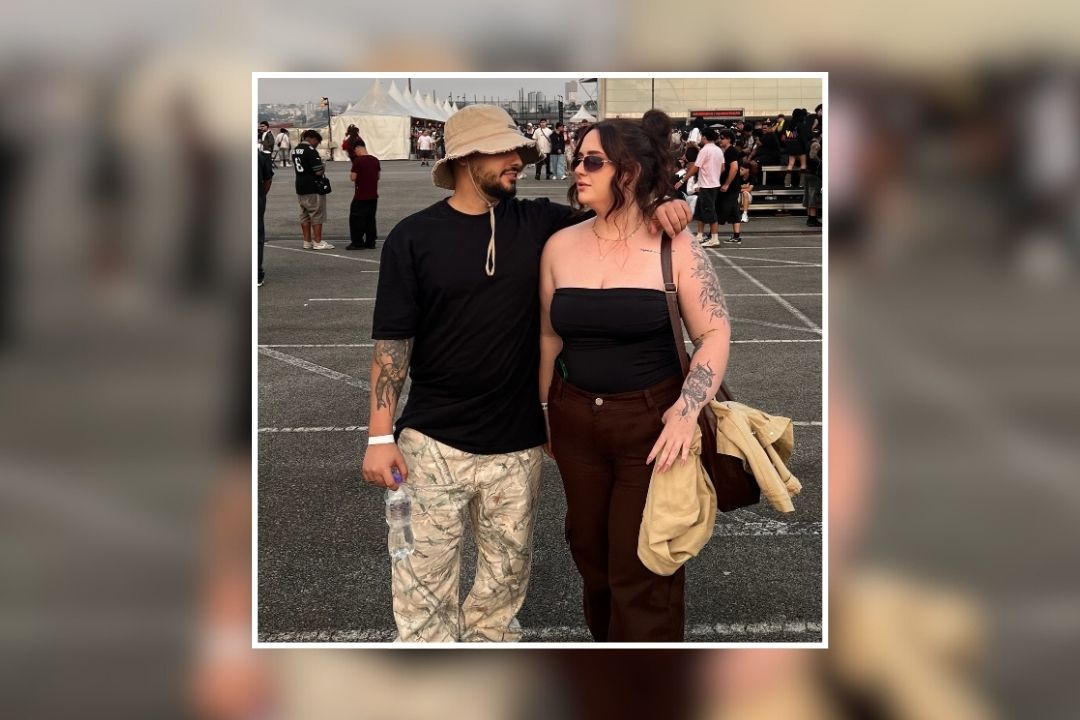
I might not be single, but I know full well that dating is not for the faint of heart. Over the years, I’ve watched countless dating trends emerge, and every time, I’ve wondered why tactics aimed at helping singles find “the one” seemingly had the opposite effect. These rules and guidelines only seemed to complicate dating further and zap the joy from it. It’s not a surprise that singles started to rebel in 2025 through popular trends like “future-proofing,” “wildflowering,” and “explorationships,” and we’re not seeing any signs of that stopping in 2026. Looking ahead, daters will continue to find matches and show up for them in ways we’ve never seen before.
Our favorite platforms and experts have revealed 2026’s biggest dating trends, and so far, they point to a more liberated and transparent dating scene. Singles will shed outdated dating rules, play the field as their most authentic selves, adopt an open mind, and more. Ahead, we’re breaking down what to expect from 2026’s biggest dating trends.
More singles are exploring online-only relationships
Obviously, technology has drastically changed how we meet potential partners, so it’s hardly surprising that more singles are open to making their relationships exclusively digital in 2026. According to Dating.com, 55 percent of daters are open to having a long-distance relationship that never goes offline. 37 percent say this is because it will help them avoid emotional fatigue, while 36 percent claim they want to date someone from a more emotionally expressive culture, who likely wouldn’t be local. Online-only connections allow singles to relinquish the responsibility of sustaining a relationship IRL, which is also a perk. Keeping things strictly online lets you build an emotional connection with a real person via chats, FaceTimes, and phone calls without ever having to worry about fitting them into your busy schedule.
“55 percent of daters are open to having a long-distance relationship that never goes offline.”
With that in mind, it’s not surprising that AI companionship is also expected to rise, particularly among daters who are burnt out and don’t want to deal with the tedious process of finding a match online. “AI companions fill a gap for people who want connection on their own terms,” Sam Mann, AI companion expert at Flirtcam.ai, tells VICE. Singles will be exploring desires, practicing vulnerability, and so forth through AI.
Of course, the caveat is that AI companionships and online-only relationships can’t replace the real human connection that’s vital for well-being. There is no complete substitute for being face-to-face with someone, so if this is something you’re interested in exploring in 2026, don’t forget to nourish your offline relationships, too, to support your mental and emotional well-being.
Fewer people are relying on one person to fulfill all their needs
I think it’s safe to say that we all want our romantic partner to be someone we know we can lean on for anything and everything. However, Dating.com’s Millennial Intimacy Report revealed many are now “emotional outsourcing,” a trend forecasted to dominate 2026, involving outsourcing emotional needs beyond a primary partner. Case in point: 48 percent of survey respondents are open to having parallel relationships, meaning they have one partner for their physical needs and another partner for their emotional needs. What’s more, 36 percent want a platonic online soulmate to fill the emotional gaps left by their partner and don’t see doing this as a form of infidelity—a practice 40 percent of respondents consider totally acceptable.
READ: People Are Leaning Into Monogamish Relationships For Free-Yet-Stable Partnerships
Rather than expecting one partner to be a best friend, therapist, and sole emotional safety net, people are distributing emotional labor across multiple relationships. In 2026, fulfillment may come less from “having it all” with one person—and more from having the right people in the right roles.
More people are considering emotional maturity a non-negotiable
The days of romanticizing “fixing” partners with emotional baggage are over. The Millennial Intimacy Report revealed that singles want partners who are actively working on themselves or have in the past. More than half (51 percent) of survey respondents say they prefer to date or be friends with people who are in therapy, and 12 percent actively filter for it on apps. The reason? Being in or open to therapy signals self-growth, accountability, and emotional maturity—three non-negotiables, according to singles.
“35 percent of singles are looking for a ‘low-key lover’ this year—someone who’s chill, avoids drama, and radiates good energy.”
Furthermore, Tinder also predicts “emotional vibe coding” will be a major trend in the dating world this year. “Daters in 2026 will be balancing talking and feeling, showing they want meaningful chemistry without emotional overcomplication,” says Tinder. Likewise, 56 percent of singles claim that honest conversations matter more than anything. Based on this, it’s safe to say the consensus is clear among daters: Emotional availability will be a turn-on, while emotional buffering—AKA using external distractions to avoid dealing with negative or uncomfortable emotions—will be a turn-off.
More daters are prioritizing low-cost, low-pressure dates
Economic pressures have unsurprisingly affected everyone’s dating life, which is why more people are leaning into gentle, low-cost dating in 2026. According to Happn, money-conscious dating is growing, with 41 percent skipping dates due to cost or opting for free date activities instead. The benefit to these, besides being cost-saving, is that coffee walks and casual hangouts, for example, emphasize gentle pacing. These are expected to replace high-pressure first dates, like the classic dinner and a movie outing. This tracks with Tinder’s Year in Swipe™ 2025 report findings, which revealed the number one first date vibe is something playful and low-pressure. Moreover, the report also found that 35 percent of singles are looking for a “low-key lover” this year—someone who’s chill, avoids drama, and radiates good energy.
Similarly, Plenty of Fish reports that singles are still leaning into love-loring and “doing it for the plot,” with 28 percent reportedly enjoying having a crush even if it doesn’t go anywhere, and 37 percent going on dates simply for the vibes alone. Basically, enjoying the experience of dating regardless of how it goes and putting yourself out there is the name of the game in 2026.
Fewer people are choosing partners based on their “type”
Dating outside your normal “type” has grown in popularity over the last few years, and Plenty of Fish reports that “chemRIZZtry”—AKA unexpectedly catching feelings for someone you didn’t think you’d be into—will take over in 2026. Similarly, “curveball-crushing” will also dominate, with 42 percent of survey respondents saying they’ve ended up really connecting with someone outside their usual “type” or usual checklist items. Going forward, vibes will take precedence over visuals—finally. On top of broadening their horizons, daters will also prioritize finding partners they’re compatible with in more areas than one; compatibility in careers, environments, and values will take center stage, as predicted by VICE.
“48 percent of survey respondents are open to having parallel relationships, meaning they have one partner for their physical needs and another partner for their emotional needs.”
These shifts are driving a 2026 dating trend Plenty of Fish has coined “the nerd normal.” This term describes the phenomenon of intelligence now being a desirable quality in potential partners rather than a “nice to have.” Of course, intellect has always been attractive, but daters are now looking for partners who have depth, things they’re interested in and passionate about, and most importantly, consistency.
Singles are no longer playing hard-to-get
For a long time, it was widely accepted that showing too much interest in someone was a turn-off and implied you were “easy.” Meanwhile, forcing someone to work for your attention made you more attractive. Yet, it’s become abundantly clear that this approach only created more confusion around someone’s intentions. Thankfully, 2026 daters can say goodbye to this ambiguity. Going forward, clear communication from the beginning will be non-negotiable.
Bumble says, “Singles are officially over murky, inconsistent communication—on both sides.” According to Bumble data, nearly half of people (44 percent) cite inconsistent communication as the “clearest sign” a connection was a dead end, and almost half (40 percent) say slow responses also signal the same. Interestingly, the data also reveals many are aware this wasn’t one-sided: 23 percent admitted they’ve struggled with unclear communication themselves, and 24 percent admitted they sent mixed signals in 2025. Clarity—or lack thereof—will be a huge factor when deciding whether to move forward with someone in 2026, and it will take precedence over chemistry to evaluate and determine long-term potential.
“Across the data, the strongest throughline is that singles want dating to feel emotionally honest, reciprocal, and grounded; not confusing, draining, or unpredictable.” Honestly, this shift is long overdue. Chemistry and passion are important, but when you’re deciding whether to share your life with someone else, you’ll be comforted knowing there will never be any confusion about where you stand—and that’s something that’ll set your relationship up for success.

Arianna Reardon, Contributing Writer
Arianna is a freelance writer and journalist, and the self-proclaimed hot and dirty martini queen. At The Everygirl, Arianna uses her authenticity and relatability to empower, inspire, and motivate women everywhere. Whether she’s writing about sex and relationships, career and finance, beauty and fashion, wellness, or home and living, Arianna’s passion shines through in all her work.
